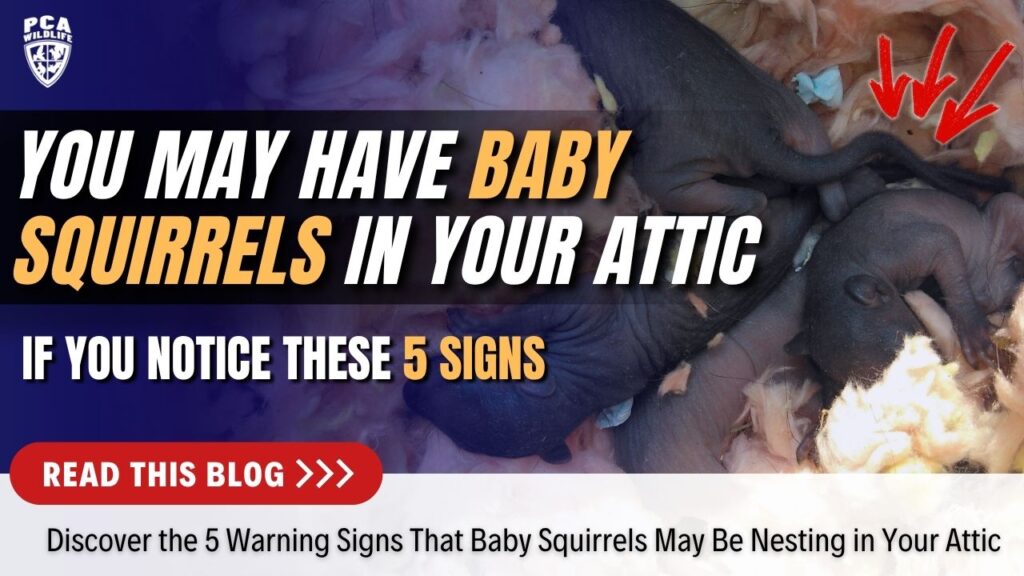
You May Have Baby Squirrels in Your Attic If You Notice These 5 Signs
Squirrel nesting season is here, and baby squirrels in the attic are becoming a common problem for homeowners in Charlotte, North Carolina. During this time of year, mother squirrels search for warm, quiet, and protected places to raise their young, making professional squirrel removal, squirrel inspection, and wildlife exclusion more important than ever. If you’ve been hearing unusual noises above your ceiling or noticing increased squirrel activity around your roofline, there’s a chance a squirrel family has already moved in. Recognizing the warning signs early can help you avoid costly repairs and prevent a small wildlife issue from becoming a much bigger problem.
Why Do Squirrels Choose Attics During Nesting Season?
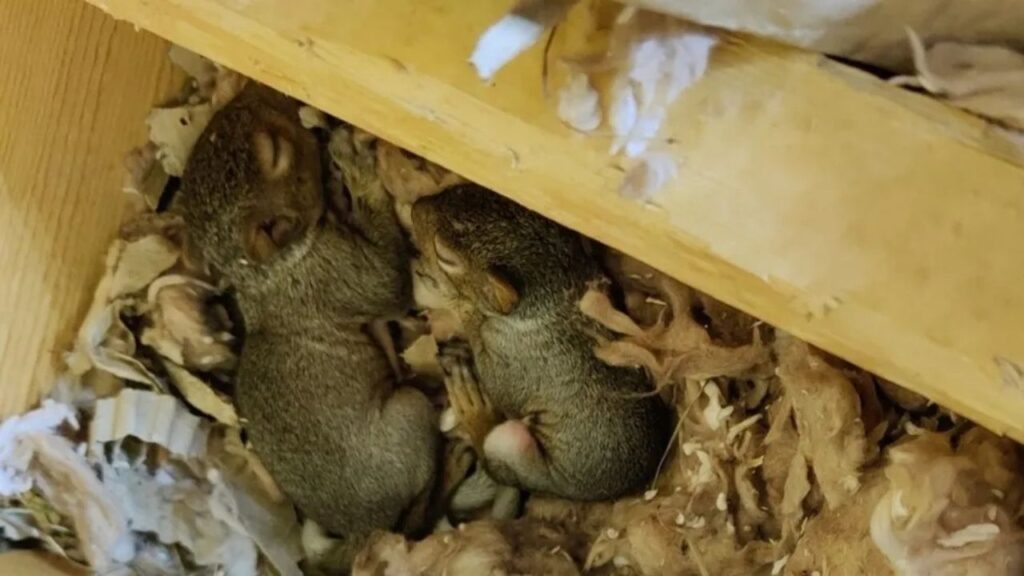
1. You Hear High-Pitched Squeaking or Chirping
Adult squirrels usually make scratching or running sounds, but baby squirrels often communicate with soft chirps and squeaks while calling for their mother.
These sounds are most noticeable during the early morning or late afternoon when the mother leaves to gather food and returns to care for her young.
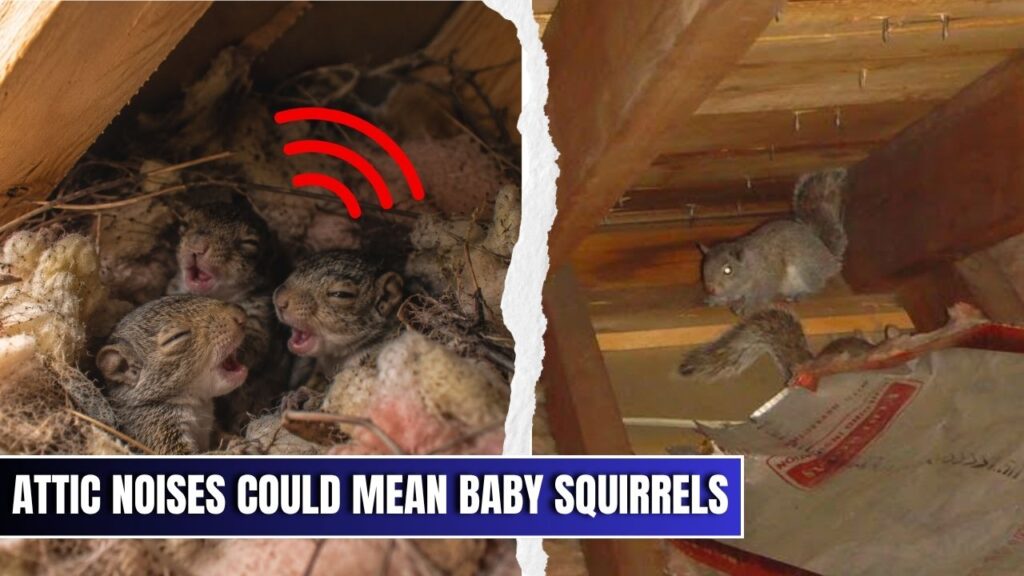
2. You Notice Constant Scratching Above the Ceiling
Scratching, scampering, or movement in your attic, walls, or ceiling can indicate that a squirrel family has moved in.
As the babies grow, they become more active inside the nest, while the mother continues bringing food and nesting materials throughout the day.
3. You See Squirrels Frequently Around Your Roof
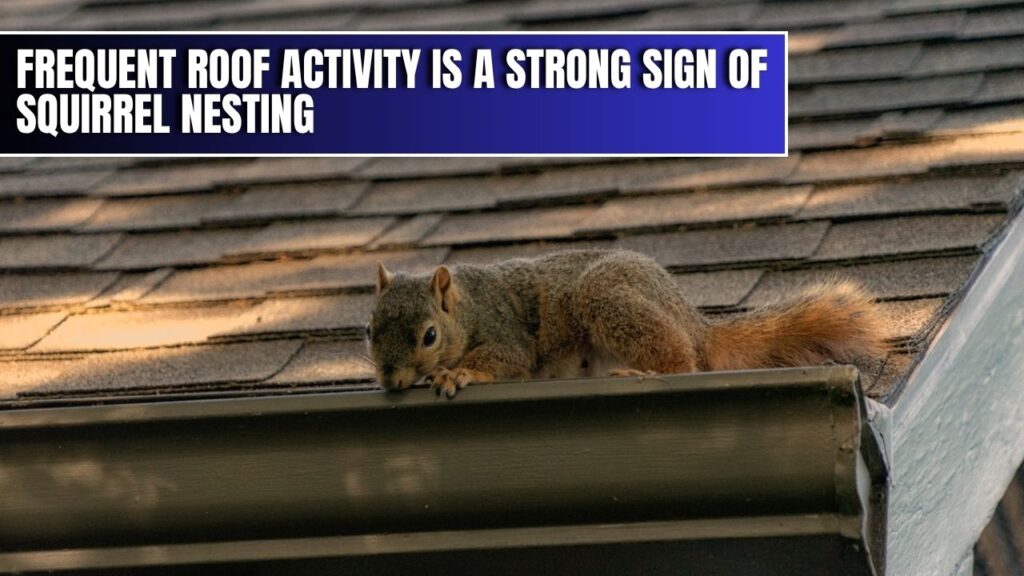
It’s normal to spot squirrels outside occasionally, but repeated activity around the same section of your roof should never be ignored.
If you consistently see a squirrel entering a small opening, disappearing into your roofline, or carrying leaves and nesting material, she may be caring for a litter of babies inside your attic.
4. You Find Nesting Materials or Damaged Insulation
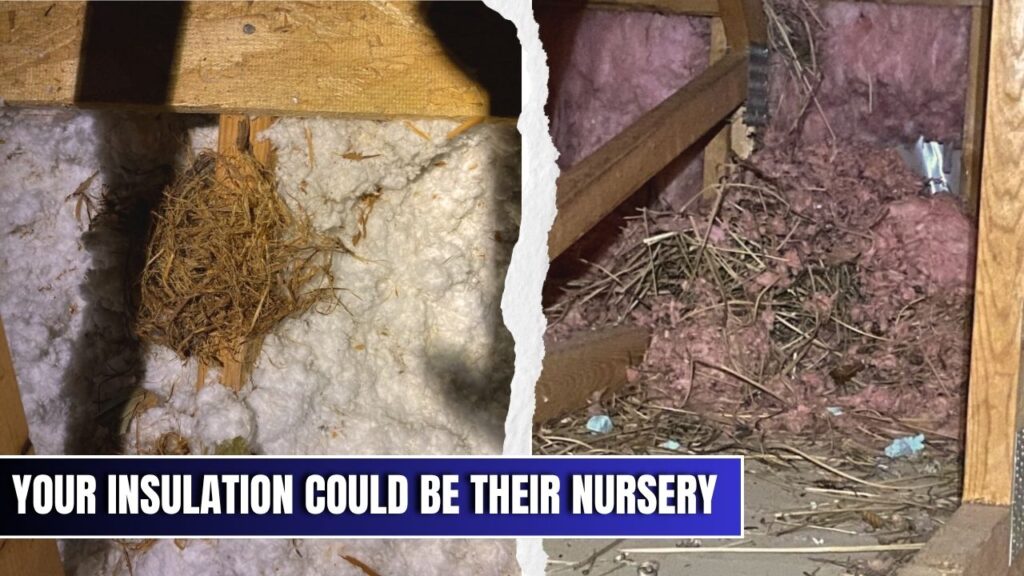
Mother squirrels create comfortable nests using attic insulation, leaves, paper, and other soft materials.
If you notice disturbed insulation, shredded materials, or newly formed nests, your attic may already be serving as a nursery for baby squirrels.
5. You Discover Droppings or Notice Unpleasant Odors
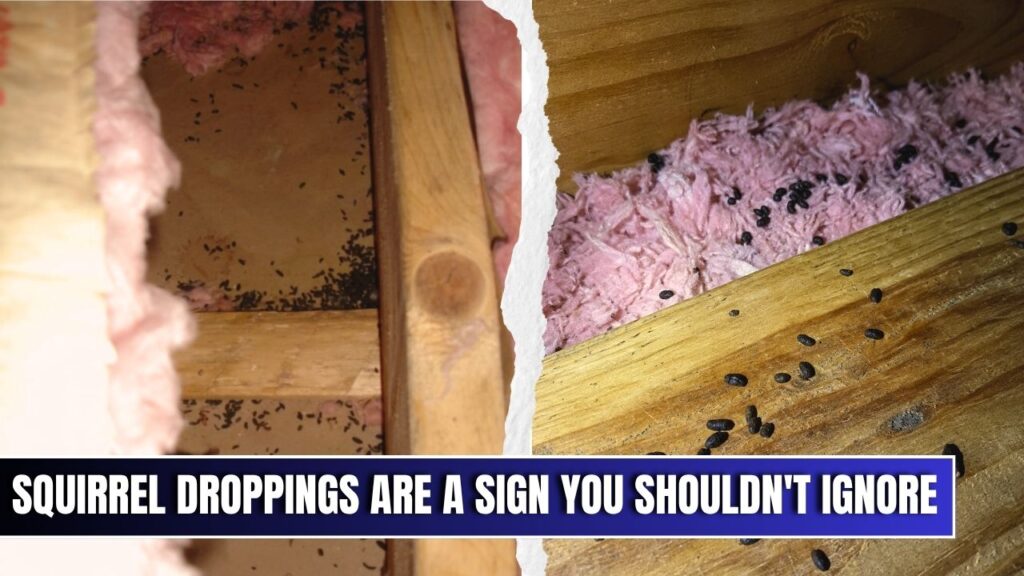
As squirrels continue living in your attic, droppings, urine, and nesting debris begin to accumulate.
Over time, this can contaminate insulation, create unpleasant odors, and increase cleanup costs. The longer the family remains inside your home, the more extensive the damage may become.
Why You Should Never Remove Baby Squirrels Yourself
During nesting season, it’s important to remember that baby squirrels rely entirely on their mother for survival. Attempting to remove them without locating the nest or confirming the mother’s presence can separate the family and create additional problems.
Sealing entry holes too soon can trap the babies inside while the mother desperately tries to get back in, often causing even more damage to your home.
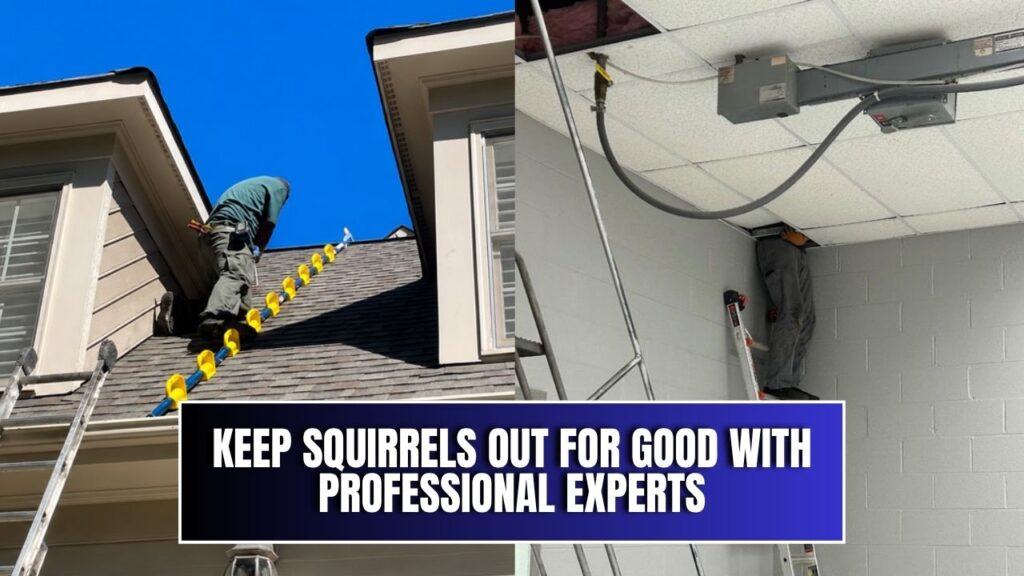
A professional wildlife removal specialist can inspect your attic, determine whether babies are present, humanely remove the family at the appropriate time, and safely seal every entry point to help prevent future infestations.
Protect Your Home During Squirrel Nesting Season
Squirrel nesting season is the best time to be proactive. If you’ve noticed unusual attic noises, increased squirrel activity around your roof, or any of the warning signs above, don’t wait until the damage becomes more serious.
Contact PCA Wildlife today at +1 704-387-5395 to schedule a professional squirrel inspection. Our experienced team provides humane squirrel removal, detailed attic inspections, and long-term wildlife exclusion solutions that help keep squirrels—and future generations—out of your home for good.
Removal Service Areas Around Charlotte, NC
PCA Wildlife provides bat removal and bat exclusion services throughout the Charlotte NC area, including Mecklenburg County, Union County, Cabarrus County, Gaston County, Iredell County, Lincoln County, Rowan County, and York County SC.
Schedule a professional inspection and learn how to seal common bat entry points, protect your attic, and make your home less inviting to bats and other unwanted wildlife.
🌐 Visit: www.pcawildlife.com