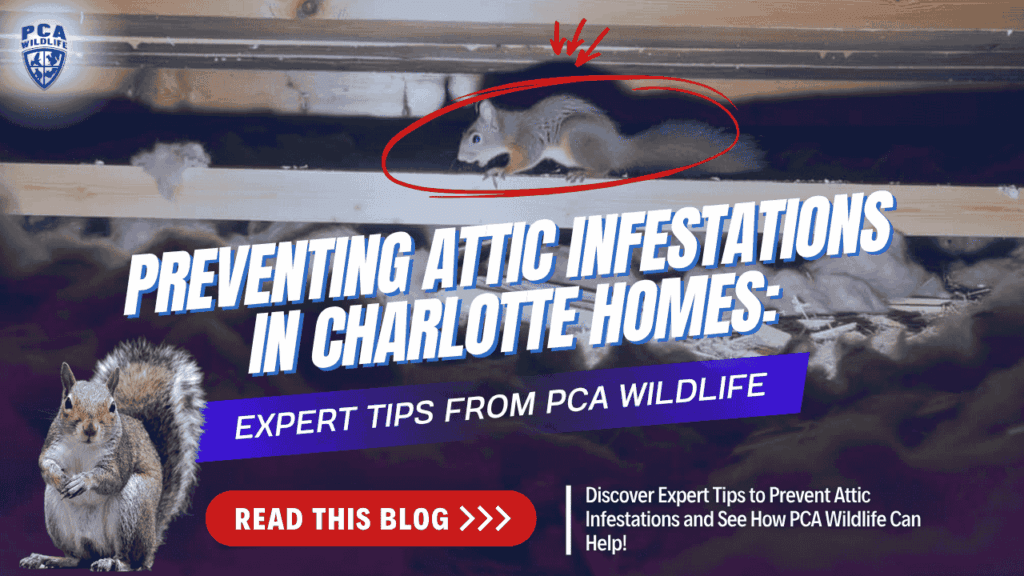
Preventing Attic Infestations in Charlotte Homes: Expert Tips from PCA Wildlife
Preventing attic infestations in Charlotte has become increasingly important as local wildlife adapts to both urban and suburban environments. Squirrels, raccoons, bats, and birds are finding attics to be safe, warm, and quiet places to nest. Although these animals may appear harmless, attic infestations can lead to costly property damage, health risks, and even fire hazards due to chewed electrical wiring. At PCA Wildlife, we offer expert guidance and humane solutions to help Charlotte homeowners protect their homes before these issues escalate.
Why Attics Are a Prime Target for Wildlife in Charlotte
Understanding why animals are drawn to attics can help prevent infestations:
- Shelter from Weather: Charlotte winters are milder than northern states, but attics still provide warmth and protection from rain, wind, and predators.
- Safe Nesting Areas: Quiet and dark, attics are ideal for raising young. Squirrels, bats, and birds especially prefer undisturbed spaces.
- Easy Access to Food Sources: Pets’ food, crumbs, or improperly stored pantry items can attract curious wildlife.
Common Signs of Attic Infestations in Charlotte Homes
Knowing the warning signs can save you thousands in repairs:
- Scratching or Scurrying Sounds: Often heard at dawn or dusk when animals are most active.
- Droppings or Urine Stains: Can indicate rodents or raccoons and may lead to health risks.
- Chewed Insulation or Wiring: Poses a fire hazard and can damage the structure.
- Strange Odors: Musty or ammonia-like smells are often a sign of urine buildup.
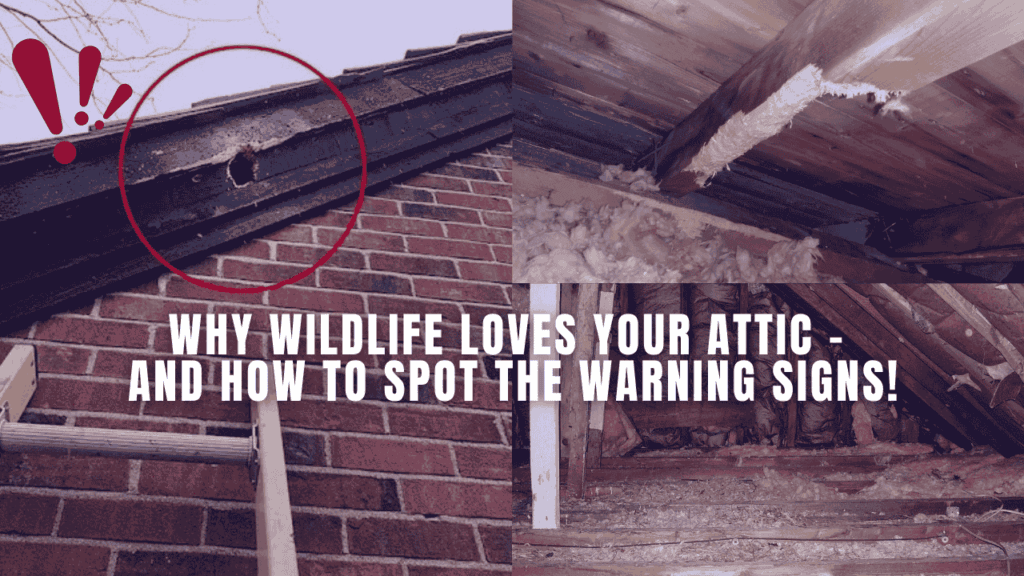
- Entry Points: Look for gaps in the roofline, vents, soffits, or eaves. Even a hole the size of a quarter can be enough for squirrels.
Expert Tips to Prevent Attic Infestations
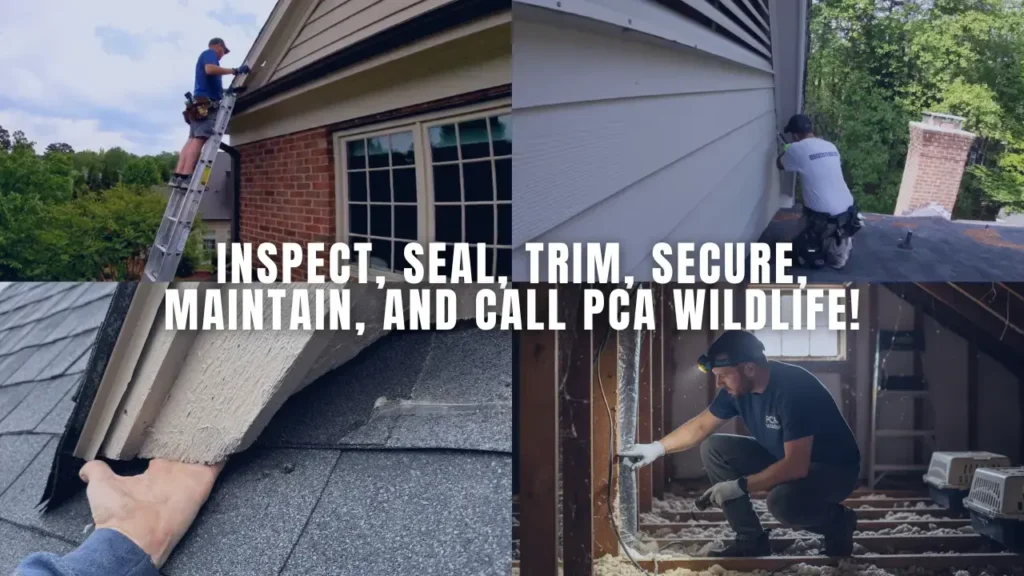
- Inspect Your Attic Regularly: Look for gaps, nesting materials, droppings, or water damage. A thorough check once a season is ideal.
- Seal Potential Entry Points: Close all gaps around vents, chimneys, soffits, and rooflines using durable materials. Professional exclusion ensures animals cannot return.
- Trim Trees and Shrubs: Branches touching your roof provide easy access for squirrels and raccoons.
- Secure Food Sources: Store pet food, birdseed, and compost properly in sealed containers to reduce attractants.
- Maintain Your Roof and Gutters: Keep gutters clean and repair damaged shingles to reduce wildlife access and nesting opportunities.
- Use Deterrents Wisely: Motion-activated lights, ultrasonic devices, and predator decoys can discourage animals from approaching your home.
- Schedule a Professional Inspection: PCA Wildlife can detect risks that are easy to overlook, such as weak entry points, hidden nests, or signs of prior infestations.
Health and Safety Considerations
Wildlife in attics can bring more than property damage:
- Disease Risks: Bats can carry rabies, raccoons can spread leptospirosis, and rodents can carry hantavirus.
- Parasites: Fleas, ticks, and mites often hitch a ride into homes.
- Fire Hazards: Chewed electrical wiring is a serious concern that can lead to fires if left unchecked.
Why PCA Wildlife Is Your Charlotte Expert
At PCA Wildlife, we combine local knowledge with humane, effective solutions. From identifying early signs of infestations to implementing long-term prevention, we help Charlotte homeowners protect their properties year-round. Our team prioritizes safety for both your family and local wildlife, ensuring a responsible approach that solves the problem for good.
Attic infestations in Charlotte homes can escalate quickly if ignored. By understanding wildlife behavior, inspecting your property regularly, and acting proactively, you can prevent costly damage and health risks. Protect your home today with expert guidance from PCA Wildlife.
📞 Call us today:
Charlotte NC – (704) 661-8228
Winston-Salem – (336) 331-5559
🌐 Visit: www.pcawildlife.com
If you need assistance or want to schedule an inspection, our team is just a call away.