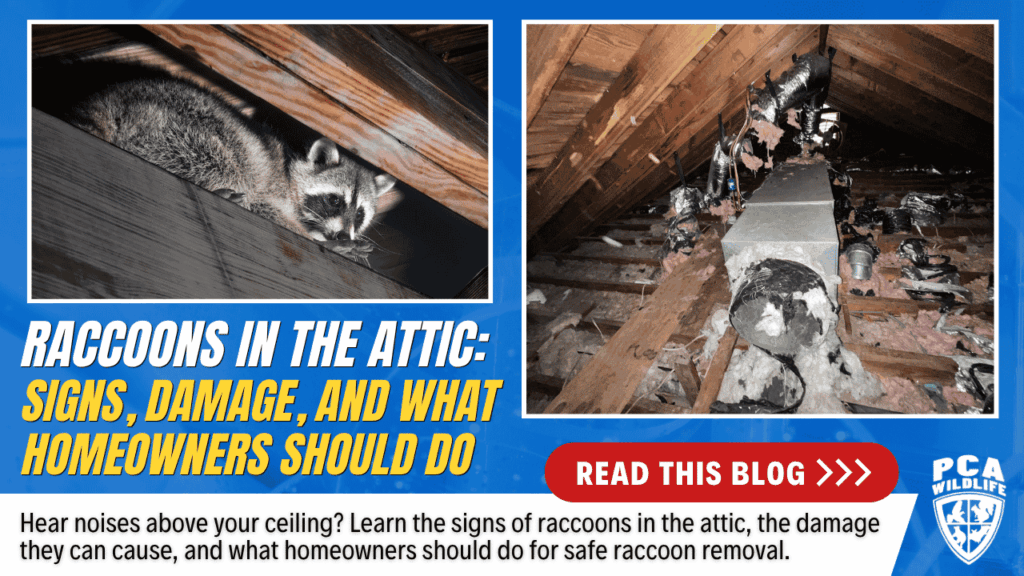
Raccoons in the Attic: Signs, Damage, and What Homeowners Should Do
Raccoons in the attic can quickly become a serious problem for homeowners. If you hear loud thumping, scratching, or movement above your ceiling, you may need professional raccoon removal or attic wildlife control. Once inside, raccoons can damage insulation, wiring, vents, ductwork, and roof areas while also creating sanitation concerns. Knowing the early signs of raccoon activity can help protect your home, prevent costly repairs, and support safe, humane wildlife removal.
Why Raccoons Enter Attics
Raccoons are smart, strong, and highly adaptable animals. They often look for warm, quiet, and protected spaces to rest, nest, or raise their young. Attics are especially attractive because they provide shelter from weather, predators, and outdoor activity.
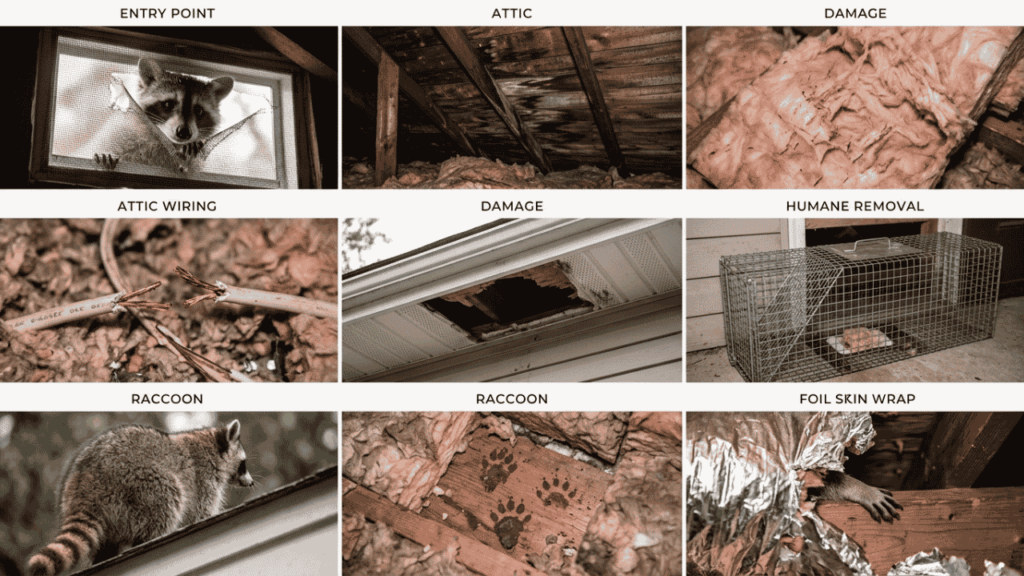
Common raccoon entry points include:
- Roof gaps
- Damaged soffits
- Fascia board openings
- Chimneys
- Roof vents
- Loose shingles
- Gaps around dormers
- Unsealed construction openings
Female raccoons are especially likely to enter attics during baby season when they are searching for a safe place to give birth and care for their young.
Common Signs of Raccoons in the Attic
Raccoons are usually active at night, so many homeowners first notice unusual sounds after dark. Because raccoons are larger than squirrels, birds, or mice, the noises they make are often louder and heavier.
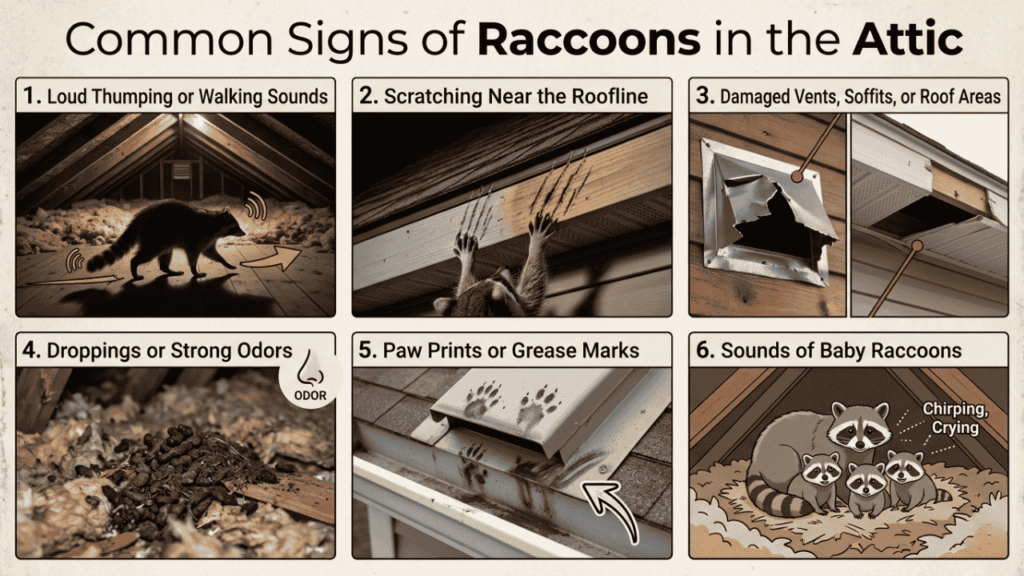
1. Loud Thumping or Walking Sounds
One of the most common signs of raccoons in the attic is heavy movement overhead. You may hear thumping, dragging, scratching, or walking sounds, especially during the evening, overnight, or early morning.
2. Scratching Near the Roofline
Raccoons may scratch at wood, shingles, vents, or soffits while trying to enter or move around inside the attic. Scratching sounds near the roofline can be a sign that raccoons are already inside or attempting to get in.
3. Damaged Vents, Soffits, or Roof Areas
Raccoons are strong enough to tear through weak materials. Bent vents, broken soffits, lifted shingles, or damaged fascia boards may indicate a raccoon entry point.
4. Droppings or Strong Odors
Raccoon droppings can create strong smells and may pose health concerns. If there is a foul odor coming from the attic, ceiling, or walls, it may be related to wildlife waste, nesting material, or contamination.
5. Paw Prints or Grease Marks
Raccoons often leave tracks, smudges, or dark rub marks near entry points. These markings can appear around vents, gutters, roof edges, or attic openings.
6. Sounds of Baby Raccoons
If a mother raccoon has entered the attic to raise young, homeowners may hear chirping, crying, or high-pitched noises. Baby raccoons should never be separated from the mother without a proper removal plan.
Damage Raccoons Can Cause in the Attic
Raccoons can cause more than just noise. Once inside, they may damage important parts of the home and create sanitation concerns.
Insulation Damage
Raccoons often tear, flatten, or contaminate attic insulation. Damaged insulation can reduce energy efficiency and may need to be removed and replaced.
Chewed or Damaged Wiring
Wildlife activity in the attic can expose or damage electrical wiring. This can create safety concerns and should be addressed quickly.
Ductwork and Vent Damage
Raccoons may crush or tear ductwork, bathroom vents, and attic ventilation materials. This can affect airflow, indoor air quality, and HVAC performance.
Structural Damage
Because raccoons are strong animals, they can widen openings, damage wood, and create larger entry points over time. A small roof gap can become a major repair issue if ignored.
Contamination from Droppings and Urine
Raccoon waste can contaminate insulation, wood, and attic surfaces. Cleanup may require proper protective equipment and professional sanitation methods.
What Homeowners Should Not Do
When homeowners suspect raccoons in the attic, it is important not to panic or attempt unsafe removal methods.
Avoid:
- Blocking the entry point immediately
- Trying to trap or remove raccoons without knowing if babies are present
- Entering contaminated attic spaces without protection
- Using poison or harmful methods
- Ignoring the problem and hoping the raccoons leave on their own
Sealing an entry point too early can trap raccoons or baby raccoons inside, which may lead to more damage, odors, and stress for the animals and the homeowner.
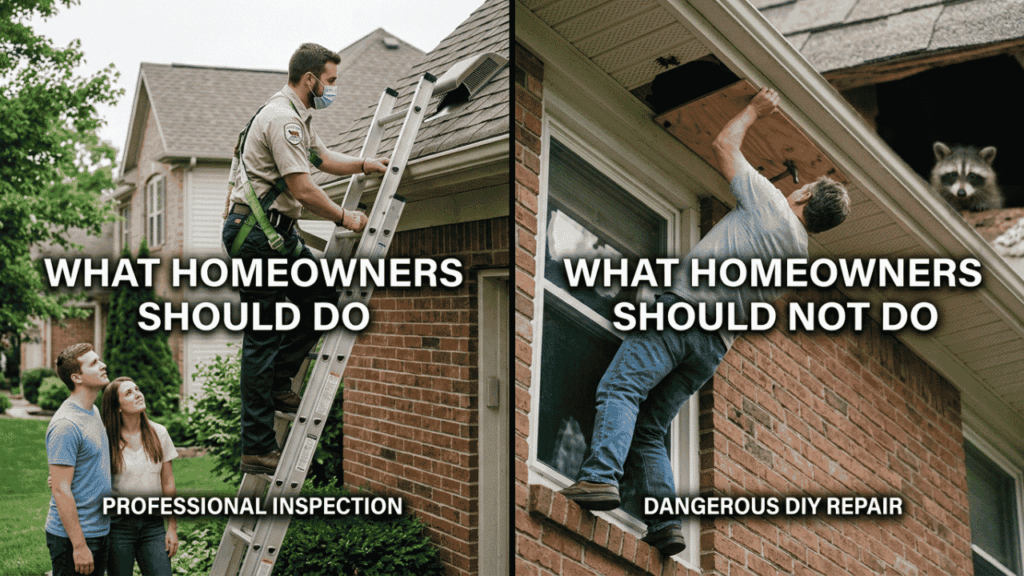
What Homeowners Should Do
The safest approach is to have the attic inspected by a wildlife control professional. A proper raccoon removal plan should include identifying entry points, checking for young, removing raccoons humanely, repairing access areas, and addressing contamination.
Homeowners should:
- Listen for the location and timing of noises.
- Look for visible roof, vent, or soffit damage from the ground.
- Avoid touching droppings, nesting material, or damaged insulation.
- Do not seal openings until the attic has been inspected.
- Contact a professional wildlife removal company.
Humane Raccoon Removal and Prevention
Raccoon removal should be handled carefully, especially when a mother and babies may be involved. Humane wildlife removal focuses on safely removing the animals while preventing them from returning.
A complete raccoon control service may include:
- Attic inspection
- Entry point identification
- Humane raccoon removal
- Baby raccoon assessment
- Exclusion and sealing
- Damage repair recommendations
- Attic cleanup and sanitation
- Prevention against future wildlife entry
The goal is not only to remove the raccoons but also to solve the reason they were able to enter in the first place.
When to Call PCA Wildlife
If you hear loud noises in the attic, notice roof damage, or suspect raccoons are living above your ceiling, it is best to schedule an inspection as soon as possible. Early action can help reduce damage, prevent contamination, and protect your home.
PCA Wildlife provides professional raccoon removal, attic wildlife control, humane wildlife removal, exclusion, and prevention services for homeowners dealing with unwanted wildlife activity.
For raccoon removal and attic wildlife control, contact PCA Wildlife today.
📞 Call us today: (704) 387-5395
🌐 Visit: www.pcawildlife.com