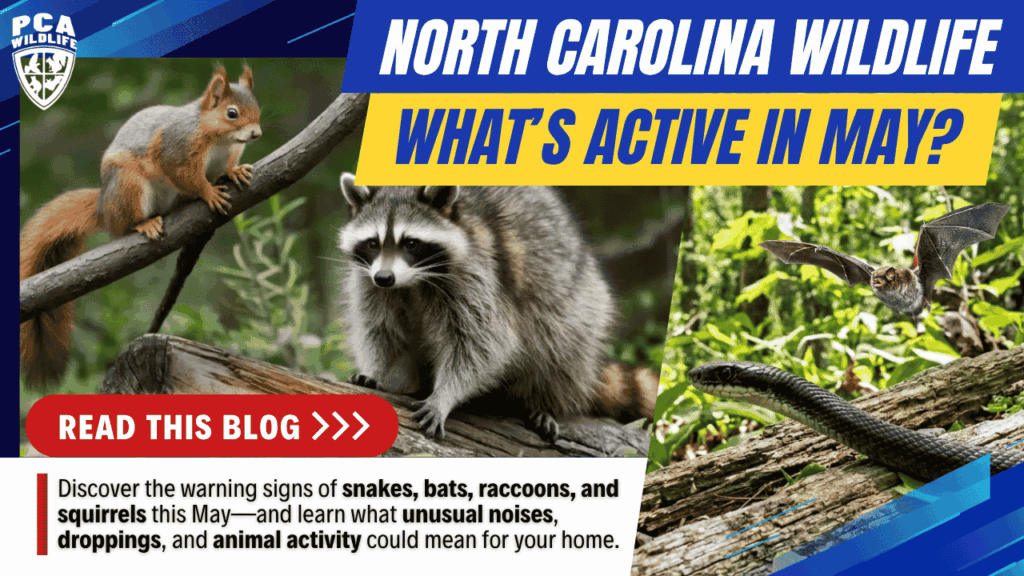
What to Expect from Wildlife Activity in May in North Carolina | PCA Wildlife Guide to Snakes, Raccoons, Bats, and Squirrels
May is one of the most active months for wildlife activity in North Carolina in May, as warming temperatures trigger breeding, nesting, and increased movement of animals searching for food and shelter. For homeowners, this is the time when snakes, raccoons, bats, and squirrels in North Carolina become more visible—and more likely to enter homes, attics, crawl spaces, and yards. Understanding what is happening right now can help prevent costly infestations and property damage.
At PCA Wildlife, we see a seasonal spike in calls every May because animals are no longer dormant or slow-moving—they are actively raising young and expanding their territories.
Why Wildlife Activity Increases in North Carolina During May
Spring in North Carolina creates the perfect conditions for wildlife:
- Rising temperatures increase animal metabolism and movement
- Breeding season is in full swing for most species
- Food sources (insects, fruits, garden crops) become abundant
- Young animals begin exploring outside nesting areas
This combination leads to more frequent sightings and higher chances of wildlife entering homes.
Snakes in North Carolina: Increased Movement and Feeding Activity
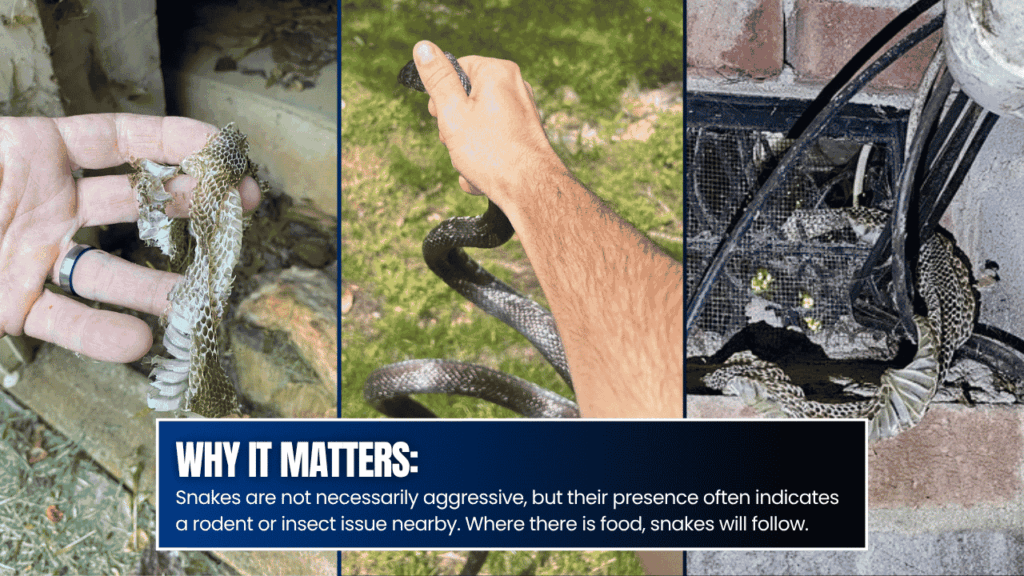
May marks a major increase in snake activity in North Carolina, especially as they follow prey like rodents and frogs.
What homeowners may notice:
- Snakes near foundations, mulch beds, and garden areas
- Increased sightings near water sources or shaded areas
- More encounters in garages, crawl spaces, or under porches
Raccoons: Denning Season and Roof Intrusions
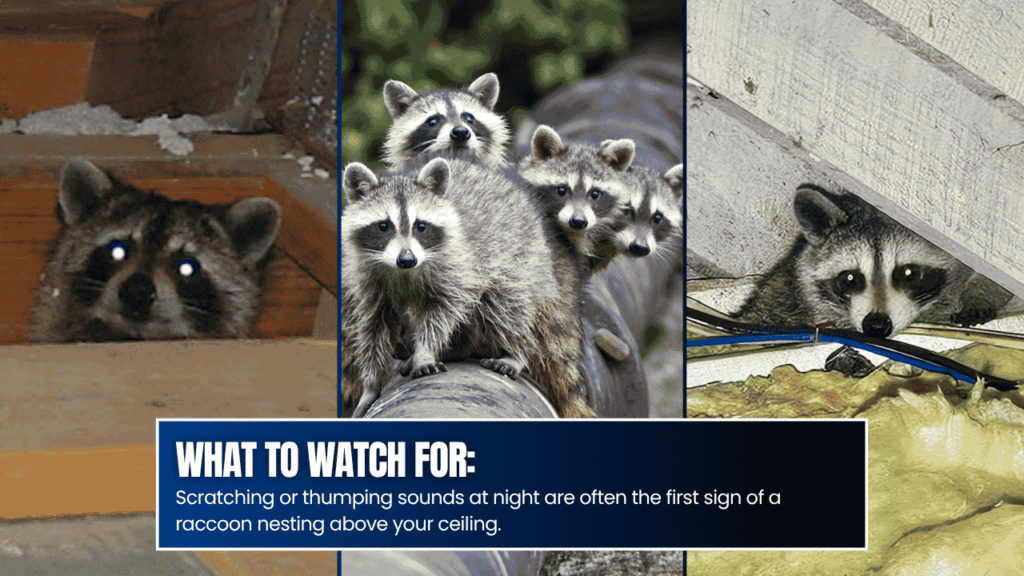
Raccoons in North Carolina during May are highly active as mothers search for secure den sites to raise their young.
Common behaviors this month:
- Breaking into attics through roof vents or soffits
- Increased nighttime noise in ceilings or walls
- Damaging insulation, ductwork, or roofing materials
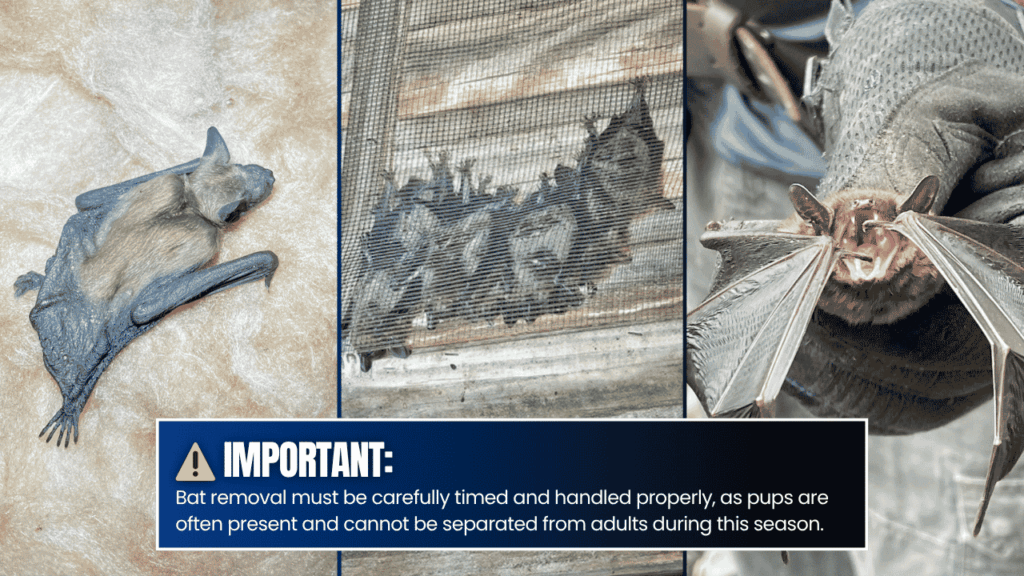
Bats: Nursery Season Begins
May is a critical time for bat activity in North Carolina, as maternity colonies form.
Key signs of bat presence:
- Droppings (guano) near attic entry points
- High-pitched squeaking sounds at dusk or dawn
- Small gaps in roofing or siding being used as entry points
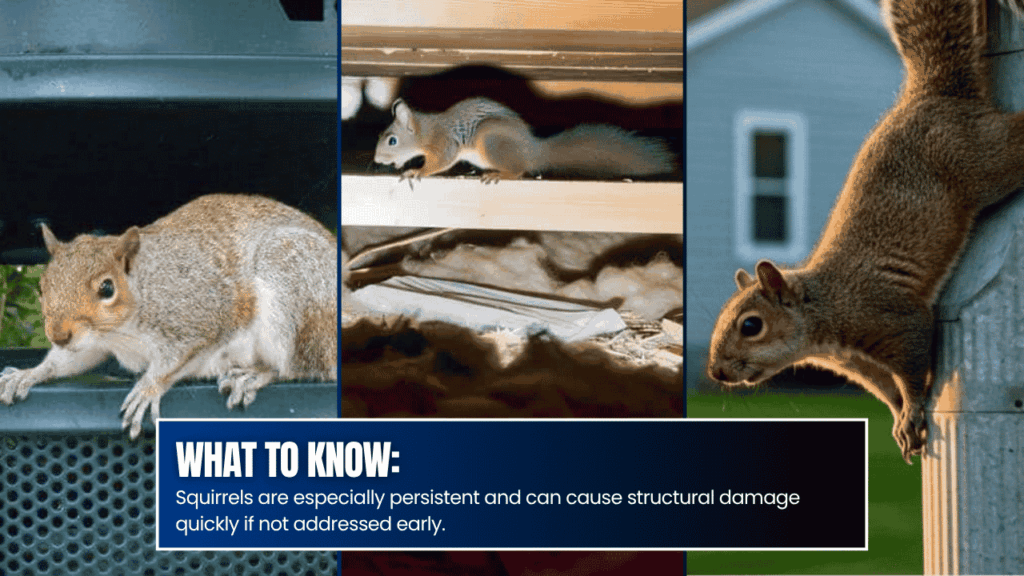
Squirrels: Peak Nesting and Roof Damage Season
Squirrels in North Carolina during May are extremely active as they build nests (dreys) and search for safe nesting spaces.
Common issues include:
- Chewed fascia boards, soffits, and roof edges
- Entry into attics through small openings
- Loud daytime scratching and running noises overhead
What Homeowners Should Watch for Right Now
- Do not touch them with bare hands
- Do not vacuum or sweep
- Do not attempt to trap animals without identifying the species
- Do not seal entry points before removal
These actions can worsen the problem or create dangerous situations.
Why Professional Wildlife Removal Matters
As wildlife activity peaks, homeowners should be alert for:
- Noises in walls, ceilings, or attics
- Droppings or nesting materials near the home exterior
- Chewed vents, wires, or wood
- Increased animal sightings during daytime or nighttime
- Unusual pet behavior (staring at ceilings or walls)
Early detection is key to preventing long-term infestations.
How PCA Wildlife Helps
At PCA Wildlife, we specialize in identifying, removing, and preventing wildlife intrusions common in North Carolina during May and throughout the year. Our approach focuses on:
- Full property inspections
- Humane wildlife removal
- Entry point sealing and exclusion
- Damage assessment and prevention strategies
Final Thoughts
May is a turning point in the North Carolina wildlife season. With snakes, raccoons, bats, and squirrels becoming highly active, homeowners need to stay alert to early warning signs. Quick action can prevent major infestations, structural damage, and ongoing wildlife issues.
If you’re hearing noises, seeing signs, or suspect animal activity in your home, early intervention is always the best approach.
👉 PCA Wildlife – Protecting homes from seasonal wildlife intrusions across North Carolina.
📞 Call us today: (704) 661-8228
🌐 Visit: www.pcawildlife.com