
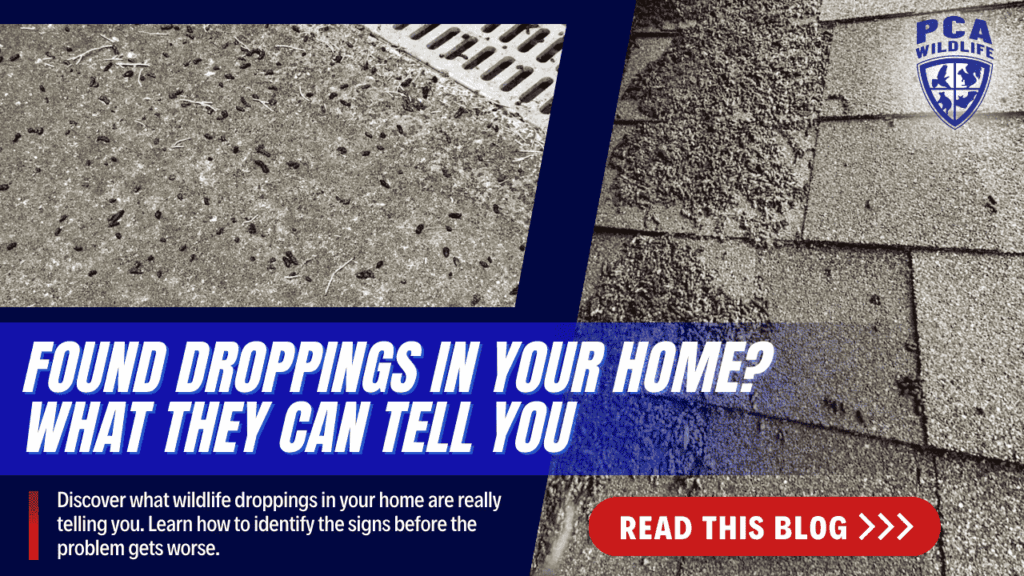
Found Droppings in Your Home? What They Can Tell You
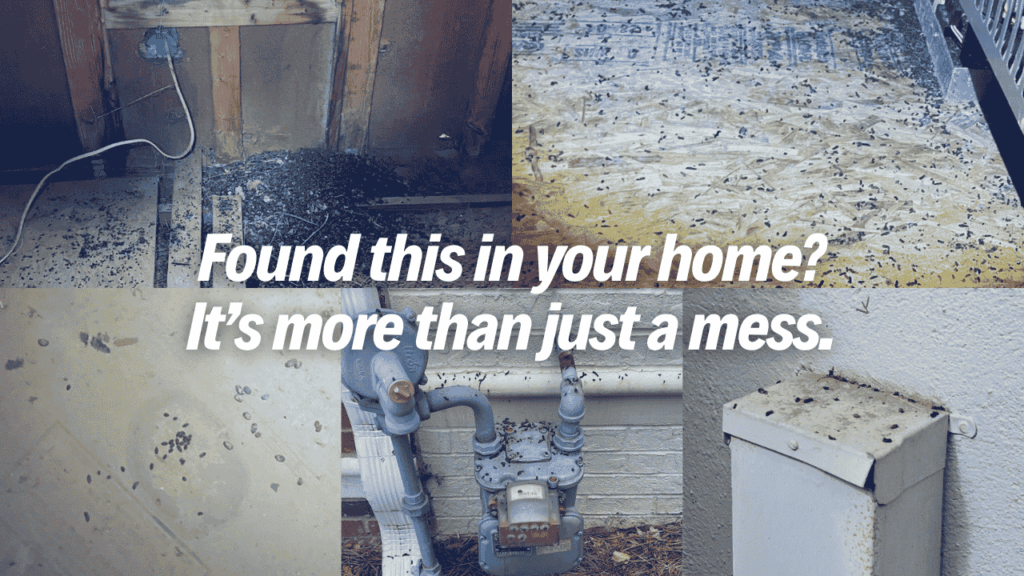
Finding wildlife droppings or animal droppings in your home is often the first sign that wildlife has entered your space. Whether discovered in an attic, garage, crawl space, or along baseboards, droppings are more than just unpleasant — they provide important clues about what animal is present, how long it’s been there, and the level of risk involved. For homeowners, this is often the moment to consider professional wildlife removal before the situation escalates.
Why Droppings Appear Indoors
Wild animals don’t enter homes randomly. Droppings usually indicate:
- Access to food, warmth, or shelter
- Nesting or breeding activity
- Seasonal behavior changes
- Structural entry points such as vents, roof gaps, or damaged siding
Once inside, animals often use the same areas repeatedly — which means droppings can accumulate quickly.
What Droppings Can Reveal
1. The Type of Animal
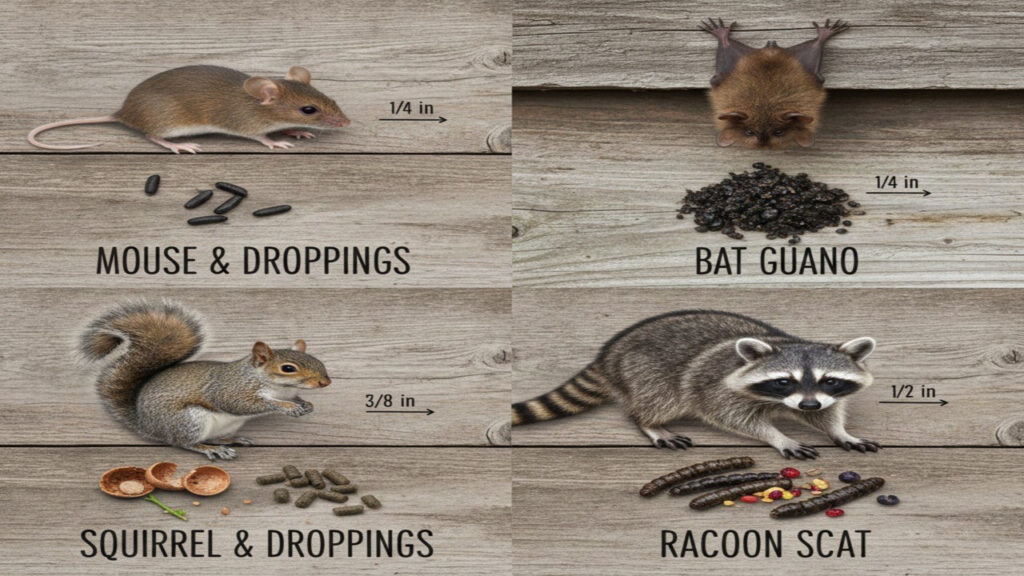
Different species leave distinct droppings:
- Rodents leave small, pellet-shaped droppings often scattered near walls
- Raccoons leave larger droppings, often in communal “latrine” areas
- Bats leave guano that piles beneath roosting spots and crumbles easily
- Squirrels leave oval droppings similar to rodents but larger
Correct identification is essential — treating the wrong animal can lead to failed removal and repeat infestations.
2. How Long the Animal Has Been There
- Fresh droppings are dark, moist, and shiny
- Older droppings are dry, brittle, and lighter in color
Large quantities often mean ongoing activity, not a one-time visit.
3. Health and Safety Risks
Wildlife droppings can carry:
- Bacteria
- Parasites
- Fungal spores
Airborne pathogens
Disturbing droppings without proper protection can expose homeowners to serious health risks. This is why sweeping or vacuuming droppings is strongly discouraged.
4. Structural Damage
Droppings often go hand-in-hand with:
- Chewed wiring
- Contaminated insulation
- Stained ceilings or walls
- Strong odors
Ignoring droppings allows damage — and contamination — to spread.
What NOT to Do If You Find Droppings
- Do not touch them with bare hands
- Do not vacuum or sweep
- Do not attempt to trap animals without identifying the species
- Do not seal entry points before removal
These actions can worsen the problem or create dangerous situations.
Why Professional Wildlife Removal Matters
At PCA Wildlife, droppings are treated as a warning sign, not just a mess. Proper wildlife removal involves:
- Identifying the species responsible
- Removing animals humanely and legally
- Cleaning and disinfecting contaminated areas
- Sealing entry points to prevent return
Cleaning without removal — or removal without cleanup — almost always leads to repeat problems.
When to Call PCA Wildlife
Contact a wildlife removal professional if you:
- Find droppings indoors
- Notice recurring odors or stains
- Hear movement in walls or ceilings
- See droppings increase over time
Early intervention protects your home, your health, and the wildlife involved.
Droppings Are a Message — Don’t Ignore It
Wildlife droppings are one of the clearest signs that animals have moved into human spaces. Understanding what they mean — and responding correctly — makes all the difference.
PCA Wildlife Removal focuses on safe, humane, and long-term solutions that protect both people and animals — because coexistence starts with responsible action.
If you’ve found droppings in your home, don’t wait.
The longer wildlife remains inside, the greater the risk to your health and property.
👉 Contact PCA Wildlife today for a professional inspection and humane wildlife removal.
Our experienced team will identify the source, remove wildlife safely, and help protect your home from future intrusion.
Early action saves time, stress, and costly repairs.
📞 Call us today:
Charlotte NC – (704) 661-8228
Winston-Salem – (336) 331-5559
🌐 Visit: www.pcawildlife.com