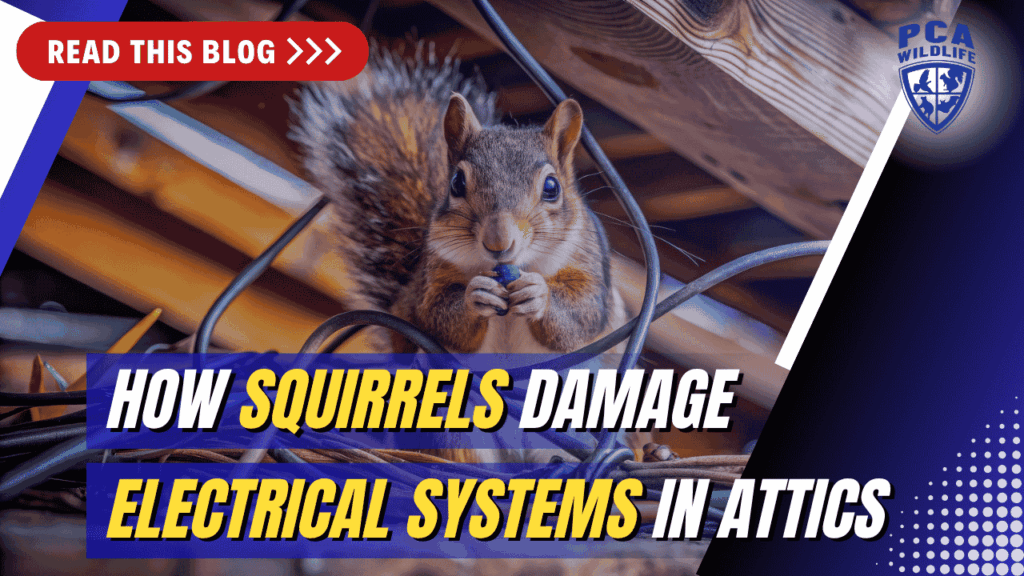
How Squirrels Damage Electrical Systems in Attics
When homeowners search for squirrel removal, squirrels in the attic, attic wildlife control, electrical wire damage, and wildlife removal in North Carolina, one of the biggest concerns is often what squirrels can do once they get inside. Squirrels may look harmless outside, but when they enter an attic, they can cause serious damage to insulation, wood, vents, and especially electrical systems. For homeowners in the Charlotte area and surrounding North Carolina communities, squirrel activity in the attic should never be ignored.
Why Squirrels Chew on Electrical Wires
Squirrels are natural chewers. Their front teeth continue to grow throughout their lives, so they constantly gnaw on different materials to keep their teeth worn down. Outside, they may chew on branches, nuts, bark, and other natural surfaces. Inside an attic, they may chew on wood beams, insulation, plastic pipes, and electrical wiring.
Electrical wires are especially vulnerable because they are often exposed or loosely secured in attic spaces. Once squirrels find a quiet, warm, protected area inside your home, chewing can quickly become a serious problem.
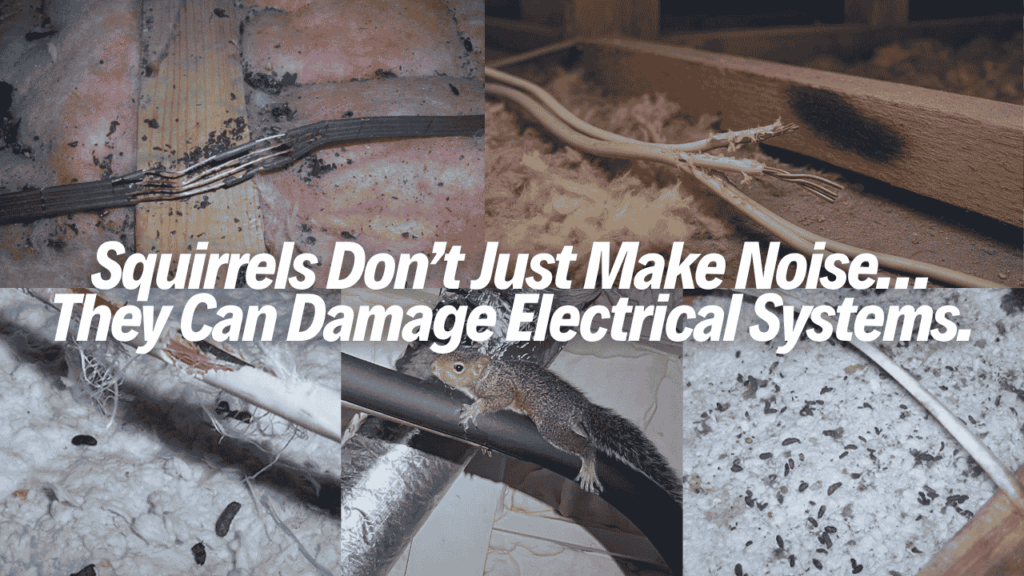
Electrical Wire Damage Can Become a Safety Hazard
One of the most dangerous problems squirrels can create in an attic is damaged wiring. When squirrels chew through the protective coating around electrical wires, the inner wiring may become exposed. This can increase the risk of short circuits, power issues, and electrical hazards.
In some cases, homeowners may not notice the damage right away. The attic is usually not an area people check often, which means chewed wires can remain hidden until a bigger issue appears. Flickering lights, tripped breakers, unusual burning smells, or sudden electrical problems may be signs that something is wrong.
If you suspect squirrels are in your attic, it is important to have the space inspected before the damage gets worse.
Squirrels Can Damage More Than Just Wires
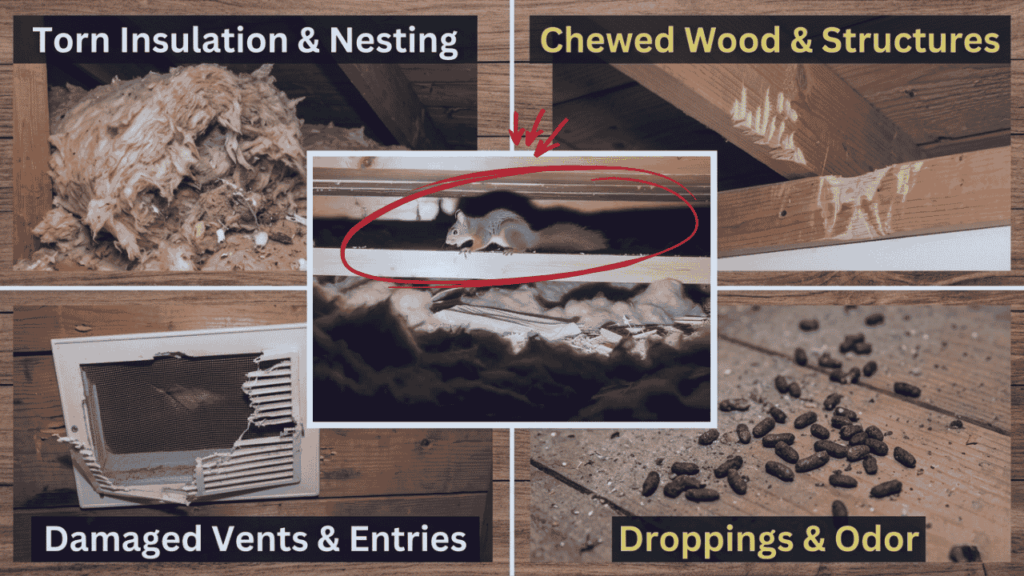
Electrical damage is one of the biggest concerns, but it is not the only issue squirrels can cause. Once inside an attic, squirrels may also:
- Tear up insulation for nesting material
- Chew wooden beams, rafters, and trim
- Damage vents, soffits, and fascia boards
- Leave droppings and urine in attic spaces
- Create strong odors over time
- Make entry holes larger as they come and go
These problems can affect your home’s comfort, energy efficiency, and overall safety. What starts as a small noise in the attic can turn into costly repairs if squirrels are allowed to stay.
Common Signs of Squirrels in the Attic
Homeowners often hear squirrels before they see them. Since squirrels are active during the day, noises may be most noticeable in the morning or late afternoon. Scratching, scampering, chewing, or rolling sounds above the ceiling can be a strong sign of attic activity.
Other signs may include:
- Noises coming from the attic or walls
- Chewed roofline areas, vents, or soffits
- Droppings in the attic
- Damaged insulation
- Small entry gaps around the roofline
- Squirrel activity near gutters, trees, or roof edges
- Unusual electrical issues inside the home
If these signs are present, a professional attic inspection can help identify the problem and locate possible entry points.
How Squirrels Get Into Attics
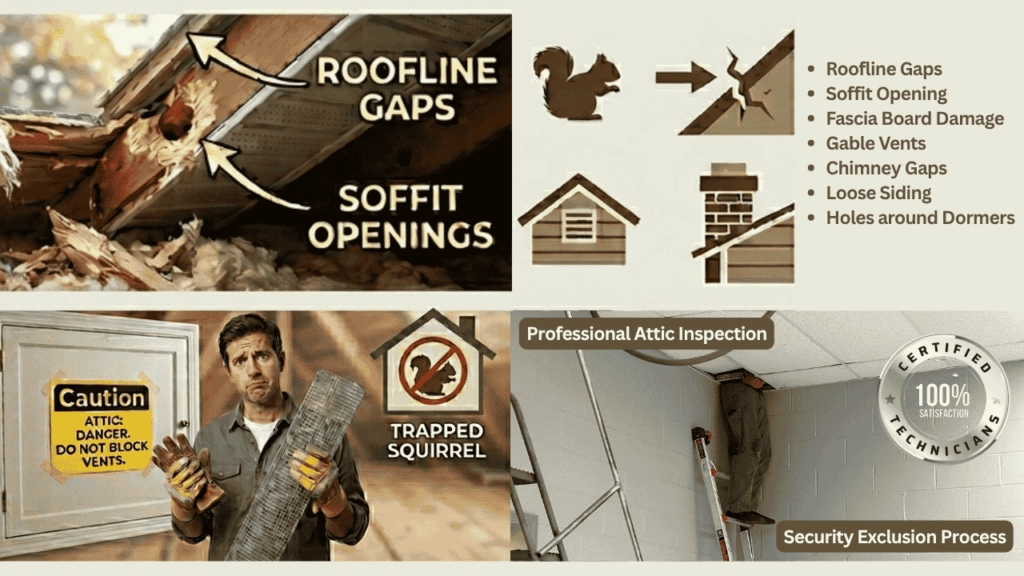
Squirrels do not need a large opening to get inside. Small gaps around the roofline can become easy access points, especially if the area is already weakened by weather, age, or previous animal activity.
Common squirrel entry points include:
- Roofline gaps
- Soffit openings
- Fascia board damage
- Gable vents
- Roof vents
- Chimney gaps
- Loose siding
- Openings near gutters
- Holes around dormers or roof returns
Once squirrels find a way inside, they may return repeatedly unless the entry points are properly sealed after removal.
Why DIY Squirrel Removal Can Be Risky
Trying to remove squirrels without the right experience can make the problem worse. Blocking an entry point too soon may trap squirrels inside the attic. This can lead to more chewing, more damage, and additional stress for the homeowner.
There may also be young squirrels in the attic during certain times of year. If babies are present, removal needs to be handled carefully and humanely. Professional wildlife control technicians know how to inspect the attic, identify nesting areas, locate entry points, and recommend the proper exclusion process.
What Homeowners Should Do
If you think squirrels are damaging your attic or electrical system, the first step is to schedule a professional inspection. Avoid touching damaged wires, droppings, or nesting material. Electrical issues should also be evaluated by a licensed electrician when wire damage is suspected.
A proper squirrel removal plan usually includes:
- Inspecting the attic and roofline
- Identifying active squirrel entry points
- Removing squirrels humanely
- Sealing access points to help prevent re-entry
- Checking for insulation, odor, and contamination concerns
- Recommending repairs when electrical or structural damage is found
Fast action can help protect your home from more serious damage.
Professional Squirrel Removal in North Carolina
PCA Wildlife provides professional squirrel removal, attic inspections, and wildlife control services for homeowners dealing with squirrels in the attic. Our team understands how squirrels enter homes, where they commonly nest, and how to help prevent them from coming back.
Whether you are hearing scratching in the attic, noticing chewed entry points, or concerned about electrical wire damage, PCA Wildlife can inspect your home and create a safe, effective removal plan.
Don’t Ignore Squirrel Activity in the Attic
Squirrels in the attic are more than just a noisy inconvenience. They can damage electrical wires, destroy insulation, chew structural materials, and create ongoing problems if the entry points are not properly addressed.
📞 Call us today: (704) 387-5395
🌐 Visit: www.pcawildlife.com