Questions to Ask Before Hiring a Wildlife Removal Company in Charlotte, NC
When you need a wildlife removal company, choosing the right team matters. Whether you are dealing with raccoon removal, squirrel removal, bat removal, snake removal, attic wildlife problems, humane animal removal, wildlife control, or exclusion services, asking the right questions can help protect your home, your family, and your property. Wildlife issues can become costly when they are not handled correctly, so it is important to hire a professional company that understands safe removal, entry-point inspections, and long-term prevention.
Before hiring a wildlife removal company, ask if they have experience with your specific animal issue, provide a full property inspection, use humane removal methods, identify entry points, offer exclusion services, check for damage or contamination, and explain what happens after the animal is removed.
Why Choosing the Right Wildlife Removal Company Matters
Wild animals can cause more than just noise or inconvenience. Raccoons, squirrels, bats, snakes, birds, and other nuisance wildlife may damage insulation, chew wiring, tear into rooflines, leave droppings, or create entry points that allow more animals to enter later.
A good wildlife removal company should not only remove the animal but also help you understand how the problem started and what can be done to prevent it from happening again. Before hiring anyone, here are the most important questions to ask.
1. Are You Experienced With This Type of Wildlife Problem?
Not every wildlife issue is the same. Removing squirrels from an attic is different from handling raccoons in a crawl space, bats in a roofline, or snakes around a home.
Ask the company if they have experience with your specific issue. A professional wildlife removal team should understand the behavior of the animal, where it is likely entering, and the safest way to remove it.
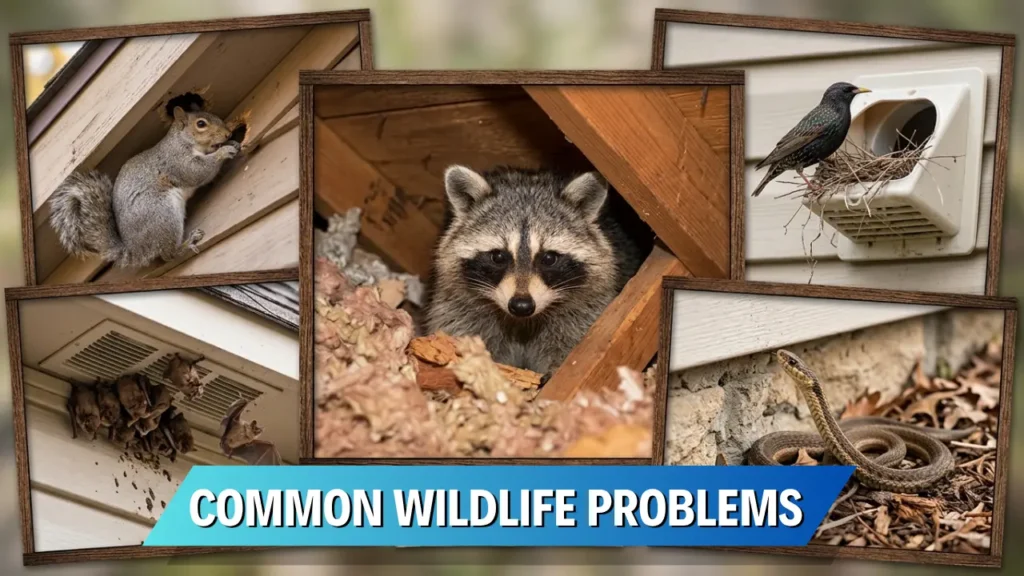
Examples of common wildlife problems include:
- Raccoons entering attics or crawl spaces
- Squirrels chewing through roof gaps or soffits
- Bats roosting near vents, chimneys, or attic openings
- Snakes appearing around yards, garages, or foundations
- Birds nesting in vents or exterior openings
The more experience a company has with your type of problem, the better prepared they will be to handle it properly.
2. Do You Provide a Full Inspection?
A quick removal is not always enough. If the company does not inspect the property, they may miss the real reason wildlife got inside.
Ask if they inspect areas such as:
- Rooflines
- Soffits and fascia boards
- Attic spaces
- Vents
- Chimneys
- Crawl spaces
- Foundation gaps
- Garage openings
- Exterior entry points
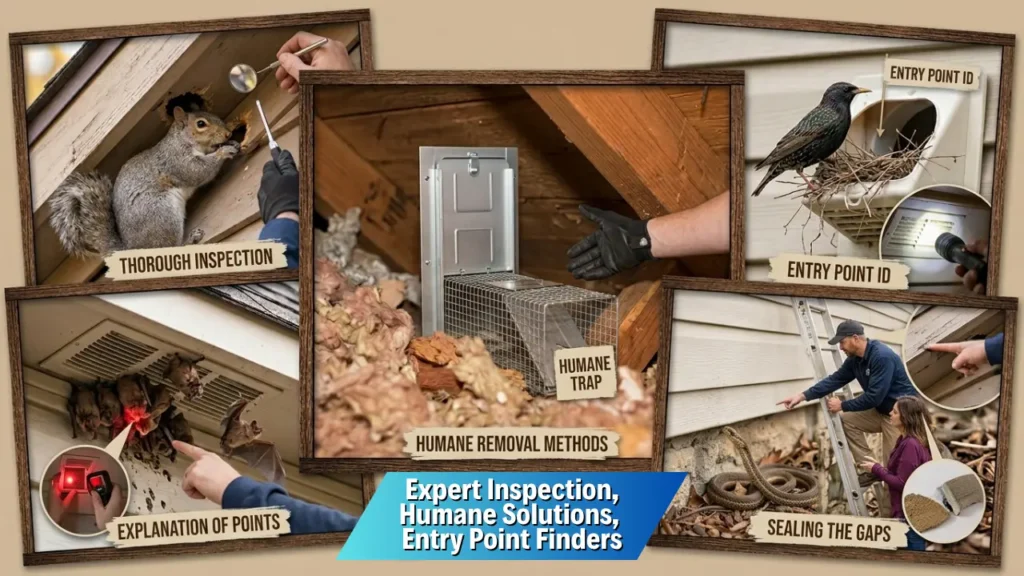
A thorough inspection helps identify how animals are getting in and whether damage has already occurred.
3. Do You Use Humane Wildlife Removal Methods?
Wildlife removal should be handled carefully and responsibly. Ask the company about the methods they use and whether they follow humane removal practices.
A professional company should focus on safe, humane solutions whenever possible. This may include proper trapping, exclusion, one-way doors, entry-point sealing recommendations, or other methods depending on the animal and situation.
Humane wildlife control is especially important when animals may have young inside an attic, wall void, chimney, or crawl space.
4. Will You Identify and Explain the Entry Points?
One of the biggest mistakes homeowners make is hiring someone who only removes the animal but does not identify how it got inside.
Ask the company:
“Will you show me where the wildlife is entering?”
A reliable wildlife removal company should be able to explain the entry points and show you the areas of concern. This helps you understand what needs to be repaired or sealed to prevent future problems.
Common entry points include damaged vents, loose soffits, roof gaps, fascia damage, chimney openings, and gaps around exterior structures.
5. Do You Offer Exclusion or Prevention Solutions?
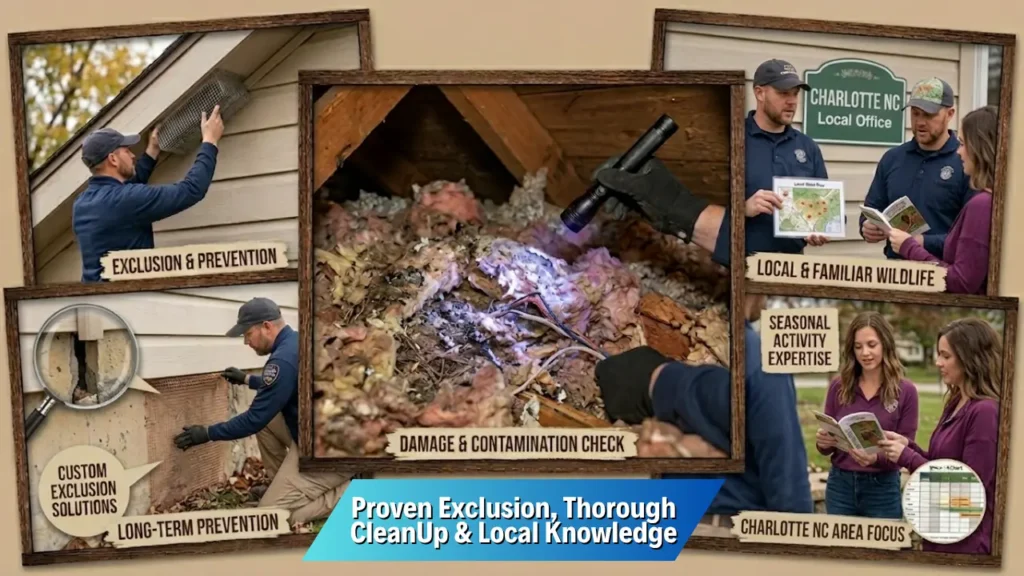
Removal solves the immediate problem, but exclusion helps prevent the problem from coming back.
Exclusion may include sealing entry points, reinforcing vulnerable areas, installing barriers, or recommending repairs. Without exclusion, another animal may enter the same opening later.
Ask if the company provides or recommends wildlife exclusion services. Long-term prevention is one of the most important parts of professional wildlife control.
6. Do You Check for Damage or Contamination?
Wildlife can leave behind droppings, urine, nesting materials, chewed insulation, damaged ductwork, or other messes inside attics, crawl spaces, or walls.
Ask whether the company checks for signs of damage or contamination. Depending on the situation, cleanup or restoration may be needed after removal.
This is especially important for bat, raccoon, squirrel, and bird problems because their droppings and nesting materials can create odor, staining, and possible health concerns.
7. Are You Local and Familiar With Wildlife in This Area?
Hiring a local wildlife removal company can make a big difference. Local professionals understand the wildlife activity common in your area, including seasonal patterns and common entry points.
For example, raccoon, squirrel, bat, and snake activity can increase during certain times of year. A local company will know what to look for and how to address the issue based on the region.
8. Can You Explain the Process Before Starting?
Before any work begins, ask the company to explain the process clearly. You should know what they plan to do, what areas they will inspect, how removal will be handled, and what the next steps may be.
A trustworthy wildlife removal company should be willing to answer your questions and explain the plan in a way that makes sense.
9. Do You Provide Residential and Commercial Wildlife Services?
If you own or manage a business, office, warehouse, restaurant, church, school, or rental property, make sure the company can handle commercial wildlife concerns as well as residential ones.
Wildlife problems can affect both homes and businesses. A company with experience in both areas can better handle different building types and property concerns.
10. What Happens After the Animal Is Removed?
This is one of the most important questions to ask.
Wildlife removal should not end the moment the animal is gone. Ask what happens next. Will they recommend exclusion? Will they reinspect the area? Will they explain possible damage? Will they help you understand how to reduce future wildlife activity?
The best wildlife removal companies focus on the full solution, not just the immediate removal.
Choose PCA Wildlife for Professional Wildlife Removal
When wildlife gets too close to your home or business, do not wait for the problem to get worse. PCA Wildlife provides professional wildlife removal and wildlife control services for homeowners and businesses dealing with raccoons, squirrels, bats, snakes, and other nuisance wildlife concerns.
Our team can inspect your property, identify wildlife entry points, remove animals using safe and responsible methods, and recommend exclusion solutions to help prevent future issues.
Call PCA Wildlife Today
If you are dealing with wildlife in your attic, crawl space, roofline, yard, or around your property, contact PCA Wildlife today to schedule an inspection.
Protect your home. Prevent further damage. Get the right wildlife removal company on your side.
🌐 Visit: www.pcawildlife.com