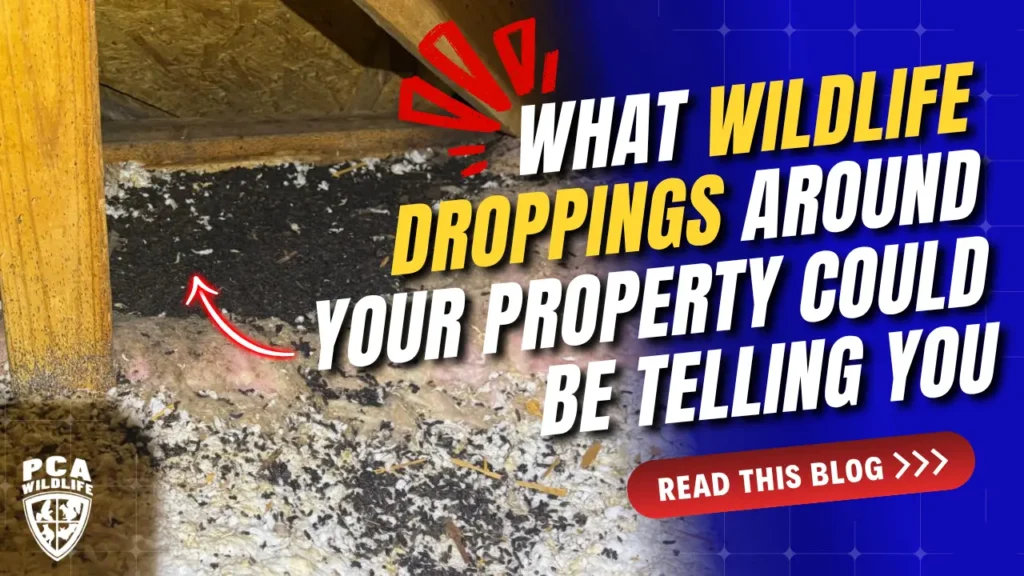
What Wildlife Droppings Around Your Property Could Be Telling You
Finding wildlife droppings around your property can be more than just an unpleasant surprise. Animal droppings near your attic, crawl space, roofline, porch, garage, deck, shed, or yard may be a warning sign of a larger wildlife control problem. Whether the droppings are from squirrels, bats, raccoons, mice, rats, birds, opossums, or another nuisance animal, they can help reveal where wildlife is entering, nesting, feeding, or traveling around your home or business. At PCA Wildlife, we help property owners identify signs of wildlife activity, remove problem animals, clean up contaminated areas, and prevent future infestations.
Wildlife droppings are often one of the first visible signs that animals are spending time where they should not be. While a single dropping outside may not always mean there is an infestation, repeated droppings in the same area should not be ignored. They may point to hidden activity inside an attic, wall void, crawl space, chimney, basement, or storage area.
Why Wildlife Droppings Matter
Animal droppings can tell you a lot about what is happening around your property. The size, shape, location, and amount of droppings may help determine what type of animal is present and how serious the issue may be.
Droppings may indicate:
- Wildlife is entering your attic, crawl space, or walls
- Animals are nesting nearby
- A food source is attracting pests
- Entry points exist around the roofline, vents, soffits, or foundation
- Wildlife has been active for longer than you realized
- Cleanup and sanitation may be needed
Droppings are not just messy. They can also create odor problems, attract insects, contaminate insulation, and potentially expose people and pets to health concerns. That is why it is important to address the source of the problem instead of simply sweeping the droppings away.
Squirrel Droppings: A Sign of Attic or Roofline Activity
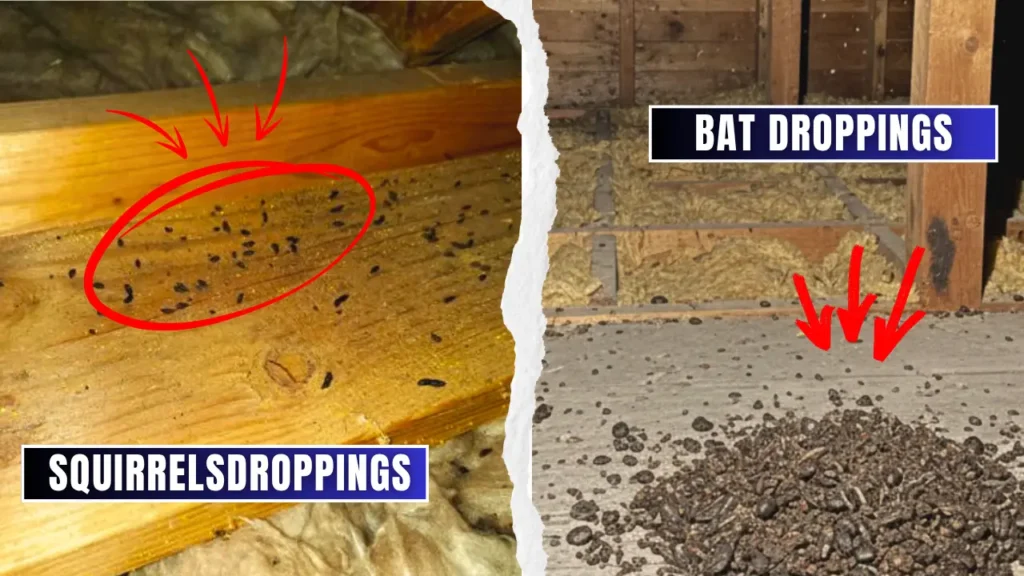
Squirrels are common nuisance animals around homes, especially in areas with mature trees, wooded lots, or easy roof access. If you are finding small, oblong droppings near attic openings, along rooflines, in gutters, or inside your attic, squirrels may be using your home as shelter.
Squirrel droppings are often found near:
- Attic insulation
- Soffits and fascia boards
- Roof vents
- Chimneys
- Garage rafters
- Storage areas
Squirrels may chew entry holes, damage insulation, gnaw on wood, and create noise during the day. If droppings are found along with scratching, running, or chewing sounds, it is time to have the home inspected.
Bat Guano: Small Droppings With Big Warning Signs
Bat droppings, also called guano, are often found below entry points, along siding, near attic vents, under shutters, around chimneys, or inside attic spaces. Bat guano can look similar to mouse droppings, but it often crumbles more easily and may contain shiny insect fragments.
Common signs of bat activity include:
- Droppings collecting below a small gap or opening
- Staining around attic vents or roofline gaps
- A strong ammonia-like odor
- Scratching or squeaking sounds at dusk or dawn
- Bats seen flying from the home in the evening
Bat droppings should be handled carefully. Large accumulations may require professional cleanup, especially when guano is inside an attic or near insulation. Bat removal also requires proper exclusion methods so the bats can leave safely and not return.
Raccoon Droppings: A Serious Sign Around Attics, Decks, and Crawl Spaces
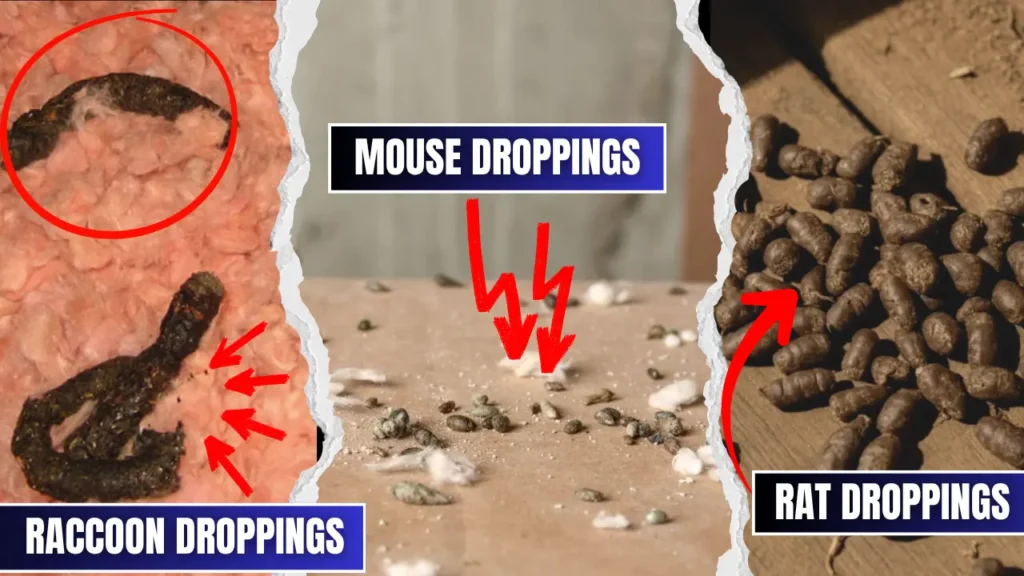
Raccoon droppings are usually larger than squirrel or mouse droppings and may be found in piles, often called latrine areas. Raccoons may repeatedly use the same spot, which can make droppings easier to notice.
You may find raccoon droppings near:
- Attic spaces
- Chimneys
- Decks
- Crawl space entrances
- Garages
- Sheds
- Wooded edges of the property
Raccoons can cause major damage when they enter homes. They may tear through vents, pull apart insulation, damage ductwork, and create strong odors. Because raccoon droppings can pose health concerns, avoid direct contact and call a professional wildlife control company for inspection and cleanup recommendations.
Mouse and Rat Droppings: Small Clues That Can Mean a Large Problem
Rodent droppings are often small, dark, and pellet-shaped. They may be found in kitchens, garages, basements, crawl spaces, attics, pantries, cabinets, and utility areas. Finding mouse or rat droppings usually means rodents are actively traveling through the property in search of food, warmth, or nesting materials.
Rodent droppings are commonly found near:
- Baseboards
- Food storage areas
- Attic insulation
- Crawl spaces
- Water heaters
- Garage corners
- Utility lines
- Foundation gaps
Rodents reproduce quickly, so droppings should never be ignored. A few droppings can quickly turn into a much larger infestation if entry points are not sealed and the rodents are not properly removed.
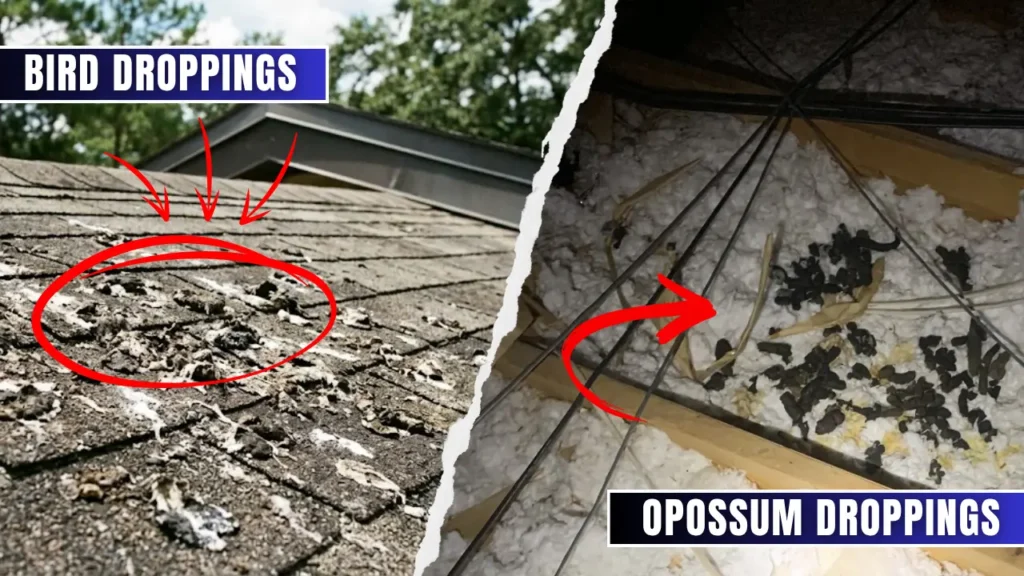
Bird Droppings: More Than Just a Mess
Bird droppings around your roofline, vents, porch, attic openings, gutters, or commercial signage can signal nesting or roosting activity. Birds may create problems when they nest in vents, chimneys, exhaust openings, or other sheltered spaces.
Bird droppings may cause:
- Staining on siding, concrete, and outdoor furniture
- Odor issues
- Clogged vents or gutters
- Nesting debris buildup
- Insect attraction
- Slip hazards on walkways
If birds are repeatedly leaving droppings in the same area, there may be a nesting or roosting site nearby that needs to be addressed.
Opossum and Other Wildlife Droppings
Opossums, skunks, foxes, snakes, and other wildlife may also leave droppings around yards, crawl spaces, sheds, decks, and wooded property lines. While some outdoor wildlife activity is normal, repeated droppings close to your home may indicate an animal is denning, nesting, or feeding nearby.
This is especially important if you also notice:
- Holes near the foundation
- Tracks in soft soil
- Damaged crawl space doors
- Burrowing under decks or sheds
- Strong odors
- Pet food or trash being disturbed
Droppings can help narrow down what animal may be present, but a full inspection is usually the best way to confirm the problem.
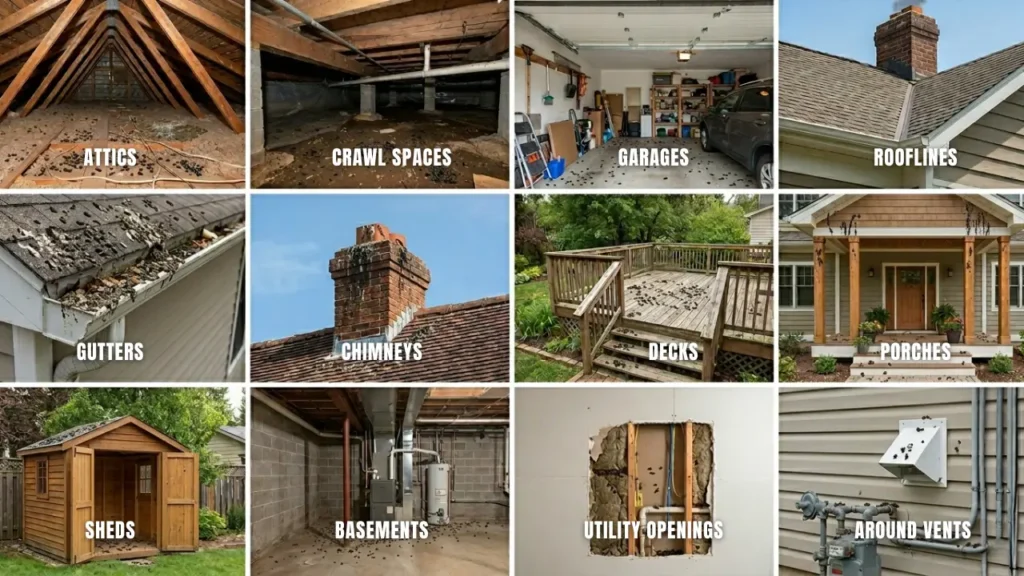
Where You Find Droppings Matters
The location of wildlife droppings can be just as important as the droppings themselves. For example, droppings below a roof vent may point to bats or squirrels. Droppings in a crawl space may indicate rodents, raccoons, or opossums. Droppings near a deck may suggest an animal is sheltering underneath.
Common problem areas include:
- Attics
- Crawl spaces
- Garages
- Rooflines
- Gutters
- Chimneys
- Decks
- Porches
- Sheds
- Basements
- Wall voids
- Around vents and utility openings
If droppings keep appearing in the same spot, wildlife is likely using that area regularly.
Do Not Just Clean It Up and Move On
It may be tempting to sweep up droppings and forget about them, but that only removes the evidence. It does not solve the source of the problem.
Before cleaning, ask:
- Where did the animal come from?
- Is it still inside?
- Are there entry points that need to be sealed?
- Is there contamination in insulation or ductwork?
- Is cleanup or deodorization needed?
- Could more animals return later?
Professional wildlife control is about more than removal. The goal is to identify the animal, remove it safely, clean up affected areas when needed, and help prevent the problem from happening again.
Why Professional Inspection Matters
Wildlife droppings can look similar, especially when dealing with smaller animals like bats, mice, rats, and squirrels. Misidentifying the droppings may lead to the wrong solution. A professional inspection can help determine what animal is present, where it is entering, how much damage has been done, and what steps are needed next.
PCA Wildlife can inspect key areas of your property, including attics, crawl spaces, rooflines, vents, soffits, fascia boards, chimneys, foundations, and other common wildlife entry points.

What PCA Wildlife Can Do
When wildlife droppings are found around your property, PCA Wildlife can help with a complete approach that may include:
- Wildlife inspection
- Animal identification
- Humane wildlife removal
- Entry-point location
- Exclusion and sealing
- Attic or crawl space cleanup recommendations
- Odor and contamination solutions
- Long-term prevention strategies
Our team focuses on solving the current problem while helping reduce the chances of wildlife returning.
Do Not Ignore the Signs
Wildlife droppings are often your property’s way of telling you something is wrong. A few droppings near the roofline, attic, crawl space, or garage may be the first clue that animals are entering your home. The sooner the issue is addressed, the easier it may be to prevent damage, odors, contamination, and repeat infestations.
Call PCA Wildlife Today
If you have found wildlife droppings around your home or business, do not wait for the problem to get worse. PCA Wildlife can inspect your property, identify the source of the droppings, safely remove nuisance wildlife, and help protect your home with effective exclusion and prevention solutions.
Contact PCA Wildlife today to schedule a professional wildlife inspection and find out what those droppings around your property could be telling you.
🌐 Visit: www.pcawildlife.com