
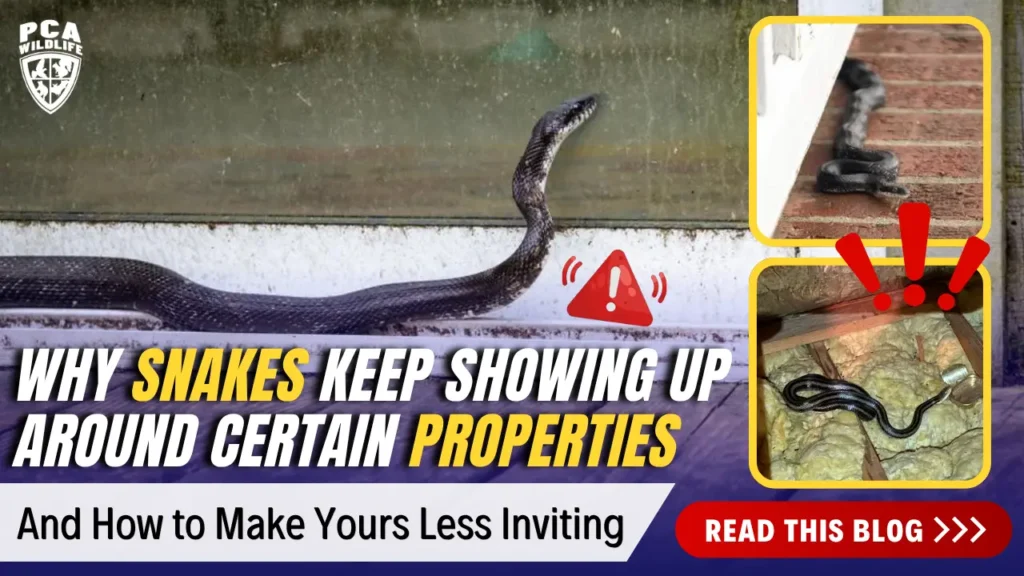
Why Snakes Keep Showing Up Around Certain Properties—and How to Make Yours Less Inviting
Seeing snakes around your home can be unsettling, especially when they keep returning. If you are wondering why snakes keep showing up around your house, the answer usually involves food, water, shelter, or easy access to the structure. Properties with rodent activity, tall grass, woodpiles, moisture problems, crawlspace openings, or dense landscaping are more likely to experience recurring snake activity.
Understanding what attracts snakes to your yard is the first step toward effective snake removal, snake prevention, and wildlife control.
1. Your Property Has a Reliable Food Source
One of the biggest reasons snakes remain around a property is the availability of prey.
Depending on the species, snakes may feed on:
- Mice and rats
- Moles and voles
- Frogs and toads
- Lizards
- Birds and eggs
- Insects
- Other small animals
A recurring snake problem may therefore be a sign of a separate wildlife or rodent issue.
Birdseed scattered beneath feeders, unsecured pet food, overflowing trash containers, livestock feed, thick vegetation, and cluttered storage areas can all support rodent populations. When rodents become established, snakes may follow.
Removing a snake without correcting the food source may only provide temporary relief. Another snake can eventually take advantage of the same conditions.
2. There Are Plenty of Places to Hide
Snakes prefer areas where they can remain concealed from people, predators, and extreme temperatures.
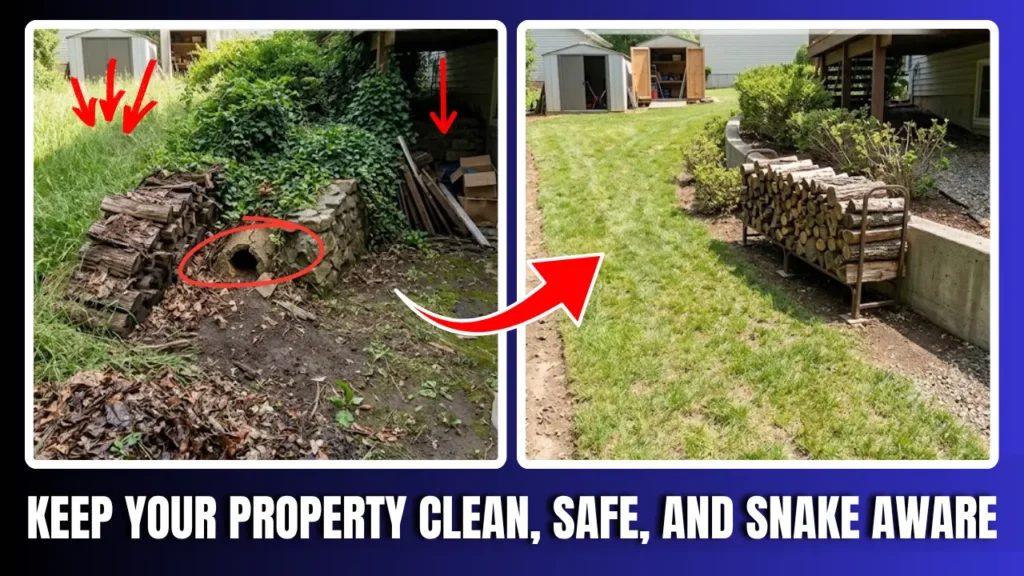
Properties with heavy ground cover often provide ideal hiding conditions. Common snake shelter areas include:
- Tall grass
- Overgrown shrubs
- Woodpiles
- Rock walls
- Leaf piles
- Landscaping timbers
- Dense ivy
- Debris beneath decks
- Storage materials resting directly on the ground
- Abandoned animal burrows
A neatly maintained yard can still attract snakes if there are secluded spaces around sheds, crawlspaces, retaining walls, drainage areas, or the edges of the property.
Keeping grass trimmed, thinning dense vegetation, removing unnecessary debris, and elevating firewood can reduce the number of protected hiding places available.
3. Moisture Is Attracting Snakes and Their Prey
Snakes need water, but moisture also attracts many of the animals they eat.
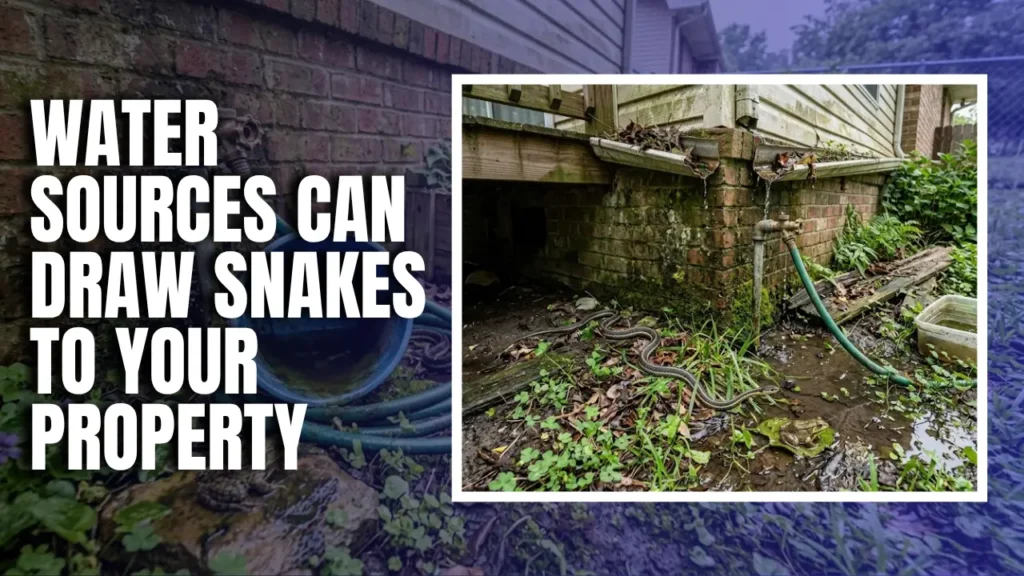
Properties with ponds, creeks, drainage ditches, standing water, leaking outdoor faucets, damp crawlspaces, or poorly draining landscaping may experience more snake activity.
Frogs, insects, rodents, and other small animals often gather around moist areas. Snakes may then arrive because the property provides both water and hunting opportunities.
Common moisture problems to investigate include:
- Leaking pipes or hose connections
- Clogged gutters
- Standing water beneath decks
- Poor drainage near the foundation
- Damp crawlspaces
- Unused containers holding rainwater
- Overwatered landscaping
Correcting moisture issues can help reduce snake activity while also protecting the property from mold, insects, and structural damage.
4. Snakes Have Found a Way Into the Structure
Snakes can enter through surprisingly small openings, especially when those gaps lead to a protected crawlspace, basement, garage, or storage area.
Potential entry points include:
- Gaps beneath exterior doors
- Damaged garage door seals
- Open crawlspace vents
- Holes around plumbing or utility lines
- Foundation cracks
- Damaged siding
- Openings beneath porches and steps
- Unscreened drainage pipes
- Gaps where additions connect to the original structure
Once inside, a snake may remain because the space is quiet, dark, temperature-controlled, and potentially occupied by rodents.
Professional snake exclusion focuses on identifying these access points and sealing them with appropriate materials. Simply blocking the most obvious opening may not solve the problem if other gaps remain.
5. The Property Provides Warmth and Temperature Protection
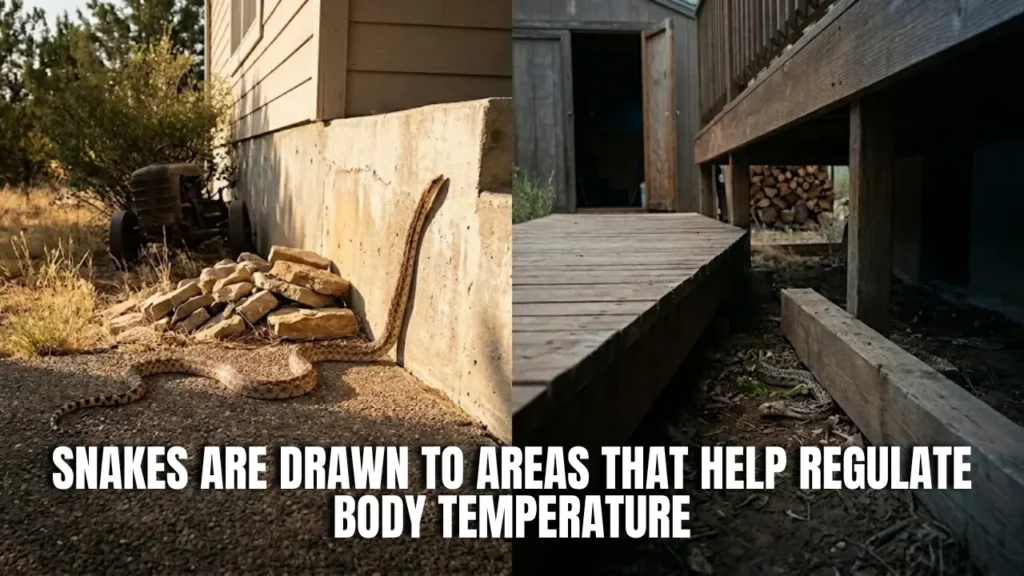
Snakes cannot regulate their body temperature the same way people and other mammals do. They move between warmer and cooler areas to maintain a suitable body temperature.
This is why snakes may be found:
- Basking on driveways or patios
- Beneath warm outdoor equipment
- Along sunny foundation walls
- Inside garages or sheds
- Beneath decks
- In crawlspaces
- Near landscaping stones that retain heat
During extremely hot weather, snakes may seek cool, shaded locations. When temperatures drop, they may look for warmer, protected spaces.
A property that offers both sun-exposed surfaces and nearby hiding areas can be especially attractive.
6. Nearby Habitat Is Pushing Snakes Toward the Home
Sometimes the issue extends beyond the property itself.
Homes located near wooded areas, fields, lakes, wetlands, creeks, construction sites, or undeveloped land naturally experience more wildlife activity. Snakes may travel through residential yards while searching for food, mates, shelter, or new territory.
Construction and land clearing can also disturb established wildlife habitat. When brush, trees, or vacant land are removed, snakes and their prey may move toward nearby homes.
You may not be able to control the surrounding environment, but you can make the area immediately around your house less attractive and more difficult to enter.
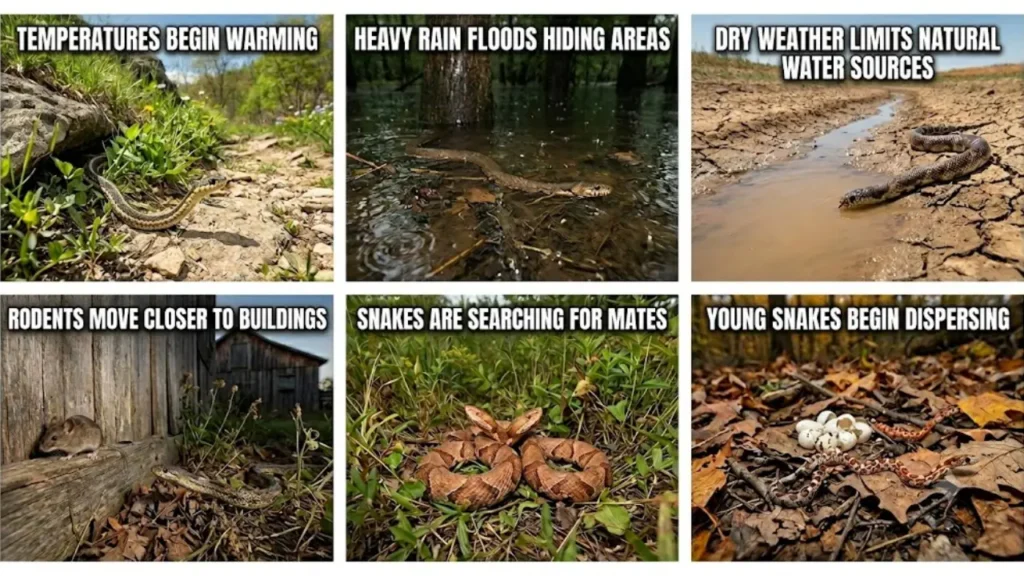
7. Seasonal Changes Are Increasing Snake Activity
Snake sightings often increase during warmer portions of the year, although exact activity depends on the species and local weather.
You may notice more snakes when:
- Temperatures begin warming
- Heavy rain floods hiding areas
- Dry weather limits natural water sources
- Rodents move closer to buildings
- Snakes are searching for mates
- Young snakes begin dispersing
- Cooler temperatures push wildlife toward protected spaces
A sudden increase in sightings does not always mean the snake population has exploded. Weather and seasonal movement may simply make existing wildlife more visible.
However, repeated sightings in the same location should not be ignored.
Does Seeing One Snake Mean There Are More?
Not necessarily.
A single snake may simply be passing through the yard. However, repeated sightings around the same foundation, crawlspace, woodpile, shed, or landscaping feature suggest that the location is providing something valuable.
Snakes do not typically create the same type of structural infestation associated with mice or cockroaches. Still, several snakes may use the same property if food and shelter are abundant.
The best way to determine what is happening is to inspect the property for prey activity, hiding areas, moisture problems, and possible entry points.
Do Snake Repellents Work?
Many products claim to keep snakes away, but repellents generally do not correct the underlying reason snakes are appearing.
Sprays, powders, strong odors, ultrasonic devices, and home remedies may provide inconsistent or temporary results. They will not eliminate rodents, repair an open crawlspace vent, remove a woodpile, or seal a foundation gap.
Long-term snake prevention usually requires a combination of:
- Reducing food sources
- Removing hiding places
- Correcting moisture problems
- Sealing structural openings
- Addressing rodents or other prey animals
What Should You Do When You See a Snake?
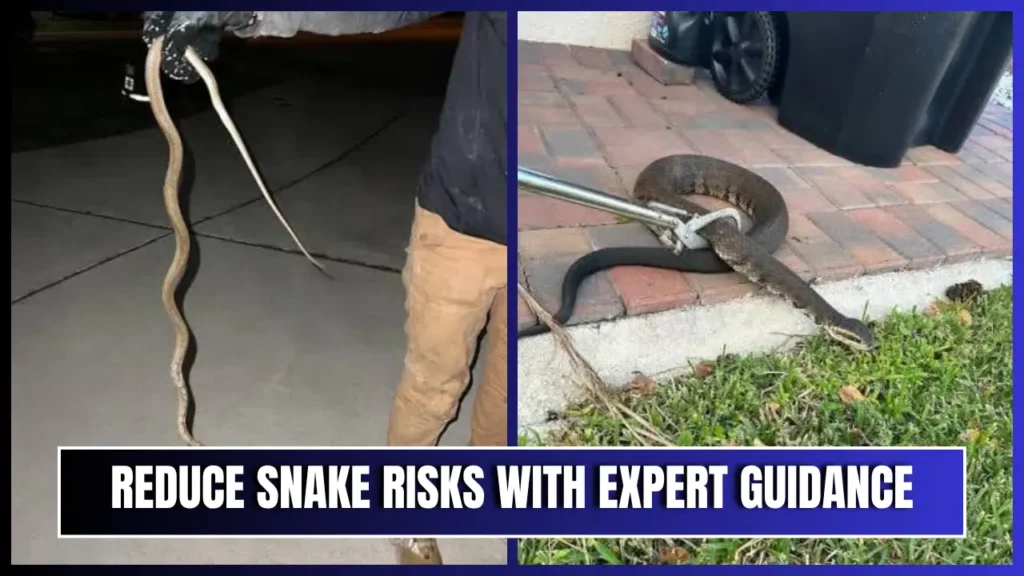
Keep children and pets away from the area and give the snake plenty of space. Do not attempt to grab, trap, corner, or kill a snake you cannot confidently identify.
Snakes may react defensively when threatened, and identification can be difficult from a distance.
Take note of where the snake was seen and where it went. This information can help a wildlife professional inspect the most likely hiding areas and entry points.
How PCA Wildlife Can Help
Recurring snake sightings often indicate that the property has favorable habitat or an unresolved wildlife issue.
PCA Wildlife can inspect the property to help identify:
- Potential snake entry points
- Rodent or prey activity
- Crawlspace and foundation openings
- Moisture-prone areas
- Landscaping conditions that provide shelter
- Other wildlife concerns contributing to the problem
Depending on the findings, recommended solutions may include wildlife removal, rodent control, habitat modification, exclusion repairs, or sealing vulnerable areas of the structure.
Stop Making Your Property a Snake-Friendly Environment
Snakes are an important part of the ecosystem, but that does not mean you want them living beneath your porch, entering your garage, or repeatedly appearing around areas used by your family and pets.
When snakes keep showing up, removing the visible animal is only part of the solution. The conditions attracting it must also be identified and corrected.
Contact PCA Wildlife

Schedule a professional inspection and learn how to make your property less inviting to snakes and other unwanted wildlife.
🌐 Visit: www.pcawildlife.com